China is the biggest coal consuming nation in the world. These mining efforts have a serious and permanent impact on the land and the people that work in the mines. Director Zhao Liang examines this industry up close in his film Behemoth.
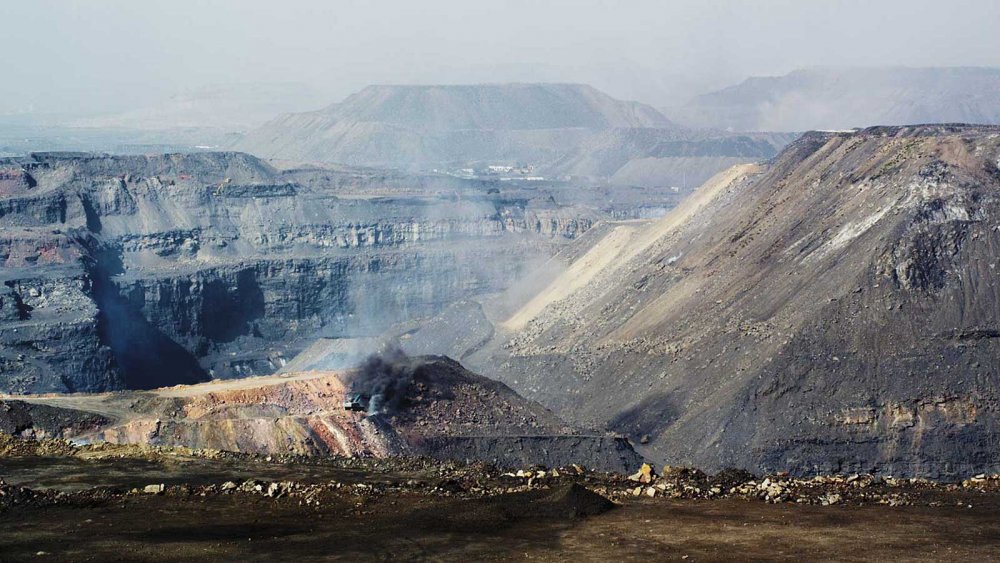
An explosion rocks the ground and surrounding area in the films opening shot. Next heavy machinery rolls across the ground negotiating around the mining space. The earth is trampled, toiled and moved in pursuit of the mineral target. A space that was once green with vegetation and full of healthy animals living in a balanced ecosystem is now filled with mining holes, hills of displaced soil and plumes of smoke and dust. The Sheppards remain with their flocks but have smaller parcels of land each day to maintain their heard. The dominant group of humans are the migrant workers who toil in the mines coming home each night exhausted and covered in coal dust that they try to wash off but a little less seems to come free from their skin with each passing day.
Zhao next trains his lens on the ironworks industry as the narrative follows a group of workers that spend their days in scalding hot conditions breathing in tiny metal particles that slowly destroys their lungs and become in-bedded in their exposed skin. It's in this sequence that Zaho's narrative link to Dante literary work jumps to life. One powerful segment is of a long close up on one of the workers where the viewer sees the little chunks of silver particles scattered across the workers face. The piece follows these workers home to their sparce living conditions and to the local hospital where many are fitted for oxygen faced with the knowledge that they most will likely not reach their sixtieth birthday.
Zhao wraps up his study with a segment on the growing number of ghosts towns in China. Sprawling cities with high risers, brand new roads, shiny traffic lights and street signs but no inhabitants. Here we follow a work tasks with cleaning up the roads and sidewalks in a town where no one lives.

Behemoth points out the totally destructive effect on humans and environment alike due to China rush to modernize and industrialize at a lightning fast pace. The end goal of profit and dollars seem to justify the heavy human and environmental toll of this march toward progress Director Zhao weaves in a stage play element with each sequence featuring a naked man normally in the fetal position as a transition device. The references to the old testament based title and Dante's work drive home the literary elements of the piece. Visually stunning images appear one after another in the three distinct chapters from the exhausted lands of eastern Mongolia, to the claustrophobic Ironworks setting ending on the hollow streets of the ghost town. Banned in its home country the film is a powerful production that I can highly recommend.
**** Out of 4.
Behemoth | Zhao Liang | China / France | 2015 | 95 Minutes.
Tag; Mining, Eastern Mongolia, Sheppard, Black Lung, Iron Works, Ghost Town
Reviews & Commentary on Film Festival Screenings, Select New Releases and Contemporary Foreign Film.
Friday, October 28, 2016
Monday, October 24, 2016
Planet in Focus Film Review - The Anthropologist
Anthropology is the scientific study of the behaviour and the physical, social and cultural development of humans. The previous of the profession go out into the field to study societies learn about cultures and societal developments. Directors Seth Kramer, Daniel A Miller and Jeremy Newberger present a piece that is a dual mother daughter story. Susie Create and her daughter Katie travel to three distant locations to learn about the local cultures that are being effected by climate change. Mary Catherine Bateson speaks of her mother Margaret Mead who began her exploration in Samoa in the South Pacific in 1925 then onto New Guinea in 1932.
Susie and Katie start off with a place that they know well Siberia. Susie met Katie's dad there and they travel back each summer to meet with relatives. On this trip the land is in a crisis setting. The ice is melting due to climate change causing the permafrost to melt turning grasslands into marshes or to a state of fully water bound. The trip shows imagines of cows sinking into the water below and stories from the locals of areas where there were structures that are now lakes.
In between trips Susie and Katie return to Fairfax Virginia where her friends think that her mom is a hippy and Katie is determined not to follow in her mothers footsteps. The next trip is to Kiribati in the South Pacific a set of islands that are slowly being covered by the raising water levels. The pair land, meet with the officials then get to work meeting and talking to the locals. Susie pays special attention to the reaction of the inhabitants. Do they have a plan to leave? Do they have a plan of attack? Or as Mary Catherine Bateson comments based on her experience do the locals resign to the fate of her cultural and civilization and choose to mourn their loss.
The directors tell the story of two daughters relationship with their mothers who took them around the world in pursuit investigation into human culture and behaviour. The difference in the daughters is an interesting part. Bateson is in her sixties and turned into an Anthropologist herself. Katie grows from 14 to 18 during the filming becoming more like her mother dispite her protests headed to university to study International studies and history.
The Anthropologist is a study in climate change that goes to the source to show the direct effect on communities of the changes to the earth. As Susie Create describes after the dignitaries are met then you go to the people to do real research. The investigation is not theory but based on conversation with the elders in a community who can comment on the culture and their land a generation back when they were kids. The narrative is an important commentary on the state of the planet that leaves it up to the viewer to decide what steps they can take to get involved.
*** 1/2 Out of 4.
The Anthropologist | Seth Kramer / Daniel A. Miller / Jeremy Newberger | USA / Kiribati / Peru / Russia | 2016 | 78 Minutes.
Tags: Protest, Permafrost, Saha , Siberia, Fairfax Virginia, Margaret Meade, Kiribati, Samoa, New Guinea, Peru.
Susie and Katie start off with a place that they know well Siberia. Susie met Katie's dad there and they travel back each summer to meet with relatives. On this trip the land is in a crisis setting. The ice is melting due to climate change causing the permafrost to melt turning grasslands into marshes or to a state of fully water bound. The trip shows imagines of cows sinking into the water below and stories from the locals of areas where there were structures that are now lakes.
In between trips Susie and Katie return to Fairfax Virginia where her friends think that her mom is a hippy and Katie is determined not to follow in her mothers footsteps. The next trip is to Kiribati in the South Pacific a set of islands that are slowly being covered by the raising water levels. The pair land, meet with the officials then get to work meeting and talking to the locals. Susie pays special attention to the reaction of the inhabitants. Do they have a plan to leave? Do they have a plan of attack? Or as Mary Catherine Bateson comments based on her experience do the locals resign to the fate of her cultural and civilization and choose to mourn their loss.
The directors tell the story of two daughters relationship with their mothers who took them around the world in pursuit investigation into human culture and behaviour. The difference in the daughters is an interesting part. Bateson is in her sixties and turned into an Anthropologist herself. Katie grows from 14 to 18 during the filming becoming more like her mother dispite her protests headed to university to study International studies and history.
The Anthropologist is a study in climate change that goes to the source to show the direct effect on communities of the changes to the earth. As Susie Create describes after the dignitaries are met then you go to the people to do real research. The investigation is not theory but based on conversation with the elders in a community who can comment on the culture and their land a generation back when they were kids. The narrative is an important commentary on the state of the planet that leaves it up to the viewer to decide what steps they can take to get involved.
*** 1/2 Out of 4.
The Anthropologist | Seth Kramer / Daniel A. Miller / Jeremy Newberger | USA / Kiribati / Peru / Russia | 2016 | 78 Minutes.
Tags: Protest, Permafrost, Saha , Siberia, Fairfax Virginia, Margaret Meade, Kiribati, Samoa, New Guinea, Peru.
Planet in Focus Film Review - In Pursuit of Silence
If a human is present pure silence does not exist. The quietest place on earth is an anechoic chamber. When a human enters the chamber they will notice two hums one high and the other low. The high one is from the nervous system firing while the low one is blood flowing through the body. Patrick Shen's film shot all around the globe carries a similar message from the experts. Too much noise is pollution, surprisingly noise pollution starts at a low decibel level and that the sounds that many of us are exposed to daily can do severe pyscholigical and physical harm.
Several shots in forests, parks and fields are used as a linking device between subjects with a measured decibel count in the corner of the screen. These reading of a still natural setting lie in the lower sound range of 30 to 45. The narrative contrast these passages with shots in the New York subway, a busy bar, airplanes passing overhead and even a public school next door to an elevated rail. These location have sound ranging in the 100 db range and beyond which effects concentration, is annoying and occupies the majority of ones attention.
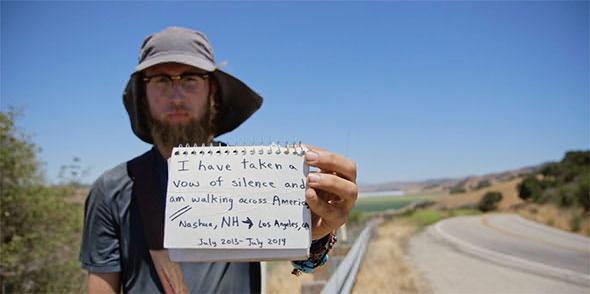
The production focuses on a few key subjects. The leading figure is John Cage who's silent composition 4'33 sparked anger and outrage when first performed but is now revered with audiences finding it a unique opportunity to share silence with a large group of people. Greg Hindy who took a vow of silence to walk across America appears towards the latter part of his journey. Dr. Yoshifumi Miyazaki forest therapy project in Japan that has brought healing to the participants, reduces the effects of some diseases and improved mental health of the subjects is also presented.
Cinematography is especially important in a film where action and sound are at a minimum. Shen and Brandon Vedder shots feature rich vibrant colours that jump out in the field, forest and park scenes. The production uses a lot of shots through windows or open spaces allowing natural sunlight to lighten an area or to bring out the shadows if that's the desired effect.
Two sequences exemplify the duelling themes of the film. One is a Japanese Tea ceremony in Kyoto the other a montage of shouting talking heads on cable news shows. In the former the guest for tea leave all of their status, outside thoughts and even their shoes behind before entering the teahouse to enjoy the ritualistic event of tea. In the latter each person talks louder than the other filibuster to get their point across into an ever increasing level of noise and pointlessness. Ego and Self importance rule in the cable news show panel world.
In Pursuit of Silence is a bold attempt to explore the importance of silence and how as a modern technological society the nuances of the art have been largely lost. The production does well to include the overabundance of stimuli on the eyes as part of this pollution as well. The film touches on many subjects in several countries with the anechoic chamber and tea house spots being the most meditative. Shen's film is very informative on an important subject that lets the viewer know that everyone should take some time and just turn the volume down for the good of their mental functioning and their physical health as well.
*** Out of 4.
In Pursuit of Silence | USA / UK / Japan | 2016 | 81 Minutes.
Tags: Silence, Noise, Pollution, 4'33, John Cage, Kyoto, Tea House, Decibel, Reflection, Meditation.
Several shots in forests, parks and fields are used as a linking device between subjects with a measured decibel count in the corner of the screen. These reading of a still natural setting lie in the lower sound range of 30 to 45. The narrative contrast these passages with shots in the New York subway, a busy bar, airplanes passing overhead and even a public school next door to an elevated rail. These location have sound ranging in the 100 db range and beyond which effects concentration, is annoying and occupies the majority of ones attention.
The production focuses on a few key subjects. The leading figure is John Cage who's silent composition 4'33 sparked anger and outrage when first performed but is now revered with audiences finding it a unique opportunity to share silence with a large group of people. Greg Hindy who took a vow of silence to walk across America appears towards the latter part of his journey. Dr. Yoshifumi Miyazaki forest therapy project in Japan that has brought healing to the participants, reduces the effects of some diseases and improved mental health of the subjects is also presented.
Cinematography is especially important in a film where action and sound are at a minimum. Shen and Brandon Vedder shots feature rich vibrant colours that jump out in the field, forest and park scenes. The production uses a lot of shots through windows or open spaces allowing natural sunlight to lighten an area or to bring out the shadows if that's the desired effect.
Two sequences exemplify the duelling themes of the film. One is a Japanese Tea ceremony in Kyoto the other a montage of shouting talking heads on cable news shows. In the former the guest for tea leave all of their status, outside thoughts and even their shoes behind before entering the teahouse to enjoy the ritualistic event of tea. In the latter each person talks louder than the other filibuster to get their point across into an ever increasing level of noise and pointlessness. Ego and Self importance rule in the cable news show panel world.
In Pursuit of Silence is a bold attempt to explore the importance of silence and how as a modern technological society the nuances of the art have been largely lost. The production does well to include the overabundance of stimuli on the eyes as part of this pollution as well. The film touches on many subjects in several countries with the anechoic chamber and tea house spots being the most meditative. Shen's film is very informative on an important subject that lets the viewer know that everyone should take some time and just turn the volume down for the good of their mental functioning and their physical health as well.
*** Out of 4.
In Pursuit of Silence | USA / UK / Japan | 2016 | 81 Minutes.
Tags: Silence, Noise, Pollution, 4'33, John Cage, Kyoto, Tea House, Decibel, Reflection, Meditation.
Saturday, October 22, 2016
imagineNATIVE '16 Film Review - Maliglutit (Searchers)
Influenced by John Ford's 1956 iconic film The Searchers director Zacharias Kunuk puts his spin on the American Western with the vast Nunavut territory replacing the Great Plains and sleds dogs supplanting horses as the chief means of transportation. Set in 1913 a group of troublemaking men are exiled from a small community due to the inappropriate actions. The men leave headed into the cold northern night hurling insults at their rivals.
Husband Kuanana (Benjamin Kunuk) is out hunting with his son for Caribou. They are successful in their pursuit leading to a night spent out on the tundra before a return home the next day. Back at their northern dwelling. His wife, daughter, young son and parents spend a joyful evening eating telling stories while enjoying each other company. Into their home charge the exiles whom perform several acts of violence on the inhabitants taking the wife and daughter as hostages. Kuanana returns to aftermath of the attack on his family. He's told to use the loon Kallilik to guide in his search for his family members. Chanting Kallilik three times asking for help he heads out across the endless tundra with his son after the raiders.
Kunkuk's film is not a direct remake of the Ford film. The later features settlers pursuing Indians while here fellow Inuit commit the atrocities. The harsh environment and limitation of the dogs and sleds creates a slower pace to the escape then adding in the enormous flat landscape increases the difficulty for the exiles to disappear. The director's lens is especially effective shooting the action scenes on the sleds. The piece employees several low angle camera shots along with tight framing on the kidnapped women giving the appearance that the sleds are floating above the crunchy snow below.
Cinematographer Jonathan Frantz uses colour, lighting shadows and firelight to bring to life the elements of the northland making the territory a major character in the story. Frantz eye is especially effective with the overhead fixed camera shots of the sleds far away in the distance. He also uses natural sunlight effectively several times particularly when it's settled low on the horizon. Costume designers Atuat Akkitirq and Susan Avingag work with furs and skins give the film an authentic feel. Their creations drive one passage where the family patriarch methodically undresses removing each layer as he readies for bed. Their clothing choices are also important to distinguish the garments of the two rival family members and associates.
The ensemble cast present themselves well in the production with the afore mentioned Benjamin Kunuk along with Joey Sarpinak as the main raider Kupak and Karen Ivalu as his wife Aulla leading the cast. Kunuk relentlessly pursues his family members building suspense and tension. Sarpinak and Ivalu have the most memorable scenes together one clearly stands out when the women attempt an ill-fated escape then Kupak tries to bring his new wife back to camp with her acting as dead weight fighting him at every turn.
Maliglutit (Searchers) is a story presented plainly without extra or unneeded plot points or sequences. Director Kunuk's storyline could translate to any setting or circumstance. The piece's cinematography is outstanding, editing crisp featuring a strong acting cast making it a film that I can highly recommend.
**** Out of 4.
Maliglutit | Zacharias Kunuk / Natar Ungalaaq | Canada | 2016 | 94 Minutes.
Tags: Nunavut, exile, kidnapping, Hunting, dogsled, Caribou, Kallulik, Revenge, Avenge.
Husband Kuanana (Benjamin Kunuk) is out hunting with his son for Caribou. They are successful in their pursuit leading to a night spent out on the tundra before a return home the next day. Back at their northern dwelling. His wife, daughter, young son and parents spend a joyful evening eating telling stories while enjoying each other company. Into their home charge the exiles whom perform several acts of violence on the inhabitants taking the wife and daughter as hostages. Kuanana returns to aftermath of the attack on his family. He's told to use the loon Kallilik to guide in his search for his family members. Chanting Kallilik three times asking for help he heads out across the endless tundra with his son after the raiders.
Kunkuk's film is not a direct remake of the Ford film. The later features settlers pursuing Indians while here fellow Inuit commit the atrocities. The harsh environment and limitation of the dogs and sleds creates a slower pace to the escape then adding in the enormous flat landscape increases the difficulty for the exiles to disappear. The director's lens is especially effective shooting the action scenes on the sleds. The piece employees several low angle camera shots along with tight framing on the kidnapped women giving the appearance that the sleds are floating above the crunchy snow below.
Cinematographer Jonathan Frantz uses colour, lighting shadows and firelight to bring to life the elements of the northland making the territory a major character in the story. Frantz eye is especially effective with the overhead fixed camera shots of the sleds far away in the distance. He also uses natural sunlight effectively several times particularly when it's settled low on the horizon. Costume designers Atuat Akkitirq and Susan Avingag work with furs and skins give the film an authentic feel. Their creations drive one passage where the family patriarch methodically undresses removing each layer as he readies for bed. Their clothing choices are also important to distinguish the garments of the two rival family members and associates.
The ensemble cast present themselves well in the production with the afore mentioned Benjamin Kunuk along with Joey Sarpinak as the main raider Kupak and Karen Ivalu as his wife Aulla leading the cast. Kunuk relentlessly pursues his family members building suspense and tension. Sarpinak and Ivalu have the most memorable scenes together one clearly stands out when the women attempt an ill-fated escape then Kupak tries to bring his new wife back to camp with her acting as dead weight fighting him at every turn.
Maliglutit (Searchers) is a story presented plainly without extra or unneeded plot points or sequences. Director Kunuk's storyline could translate to any setting or circumstance. The piece's cinematography is outstanding, editing crisp featuring a strong acting cast making it a film that I can highly recommend.
**** Out of 4.
Maliglutit | Zacharias Kunuk / Natar Ungalaaq | Canada | 2016 | 94 Minutes.
Tags: Nunavut, exile, kidnapping, Hunting, dogsled, Caribou, Kallulik, Revenge, Avenge.
Friday, October 21, 2016
Planet in Focus Film Festival Review - Theater of Life
One billion people on the planet have an overabundance of food while the same number on the other end of the spectrum have little or nothing to eat at all. The goal of Chef Massimo Bottura is to bring these two extremes closer together by using the waste from the former to feed the latter. The opening quote of the film refers to bread being gold. Massimo's plan is to use the daily disregarded food from the 2015 Milan Expo to feed the poor of the Greco district in the bottom of a historical theatre. Bottura made a few calls leading to 60 chefs from all over the world including Mario Batali, John Winter Russell, Jeremy Charles and Yoshihiro Narisawa attending Milan to cook for the locals.
Director Peter Stavek focuses on a few of the regulars that attend the Refettorio Ambrosiano Soup Kitchen. Svatek spent time with them learned about their lives outside of the kitchen, what has happened in their past and their hopes for the future. As a few of the Chef said the normal conversation with guests are different in this situation. It's hard to ask how things are going at work or what the next big upcoming event is if your audience are the homeless and refugees.
The main ingredient for the meals at the Refettorio Ambrosiano is bread the main waste item from the Expo's pavilions. The bread is stale so the chefs have to improvise to make dishes for the guests. The next plentiful ingredients are vegetables and elements to make sauces that the expert use to create their gourmet meals.
The first locals introduced are Stefi and Marco who live in the Monza train station. They are happy despite their current situation and are only looking for a home. Marco sings an Italian version of Bob Dylan's Like a Rolling Stone that a defacto theme for the soup kitchen's guests. Fawaz is the most defiant of the regulars. He feels treated like an object at the kitchen believing that no one cars about his fate once he steps outside of the kitchen's doors. Fatou is the most positive dreaming of being a model despite being confined to a wheelchair. She is friendly to everyone always having a smile on her face. Georgio and Christiana have the most challenging backgrounds. Girogio had several mental issues that included a suicide attempt while Christiana past includes prostitution and being abandoned by the father of her young child.
Director Stavek touches on several leading issues in today's society in the film. The locals discuss the new refugees in Italy with the native Italian feeling that there is no room in the shelters due to the influx of the new arrivals. The waste of food is a hot topic all over the world. Chef Bottura and his partner Lara Gilmore have taken action forming foodforsoul.it whose presence was at last seen at the Rio Olympics at Refttorio Gastromotiva . Food is family and meals are a forum to exchange ideas and thoughts so much so that the Refettorio Ambrosiano Soup Kitchen turned into the community centre for the poor Greco district of Milan.
*** 1/2 Out of 4.
Theater of Life | Peter Svatek | Canada | 94 Minutes.
Tags: Bread, Milan Expo 2015, Monza Train Station, Like a Rolling Stone, Refettorio Ambrosiano,Soup Kitchen, Gourmet Chef, Homeless, Refugee.
Director Peter Stavek focuses on a few of the regulars that attend the Refettorio Ambrosiano Soup Kitchen. Svatek spent time with them learned about their lives outside of the kitchen, what has happened in their past and their hopes for the future. As a few of the Chef said the normal conversation with guests are different in this situation. It's hard to ask how things are going at work or what the next big upcoming event is if your audience are the homeless and refugees.
The main ingredient for the meals at the Refettorio Ambrosiano is bread the main waste item from the Expo's pavilions. The bread is stale so the chefs have to improvise to make dishes for the guests. The next plentiful ingredients are vegetables and elements to make sauces that the expert use to create their gourmet meals.
The first locals introduced are Stefi and Marco who live in the Monza train station. They are happy despite their current situation and are only looking for a home. Marco sings an Italian version of Bob Dylan's Like a Rolling Stone that a defacto theme for the soup kitchen's guests. Fawaz is the most defiant of the regulars. He feels treated like an object at the kitchen believing that no one cars about his fate once he steps outside of the kitchen's doors. Fatou is the most positive dreaming of being a model despite being confined to a wheelchair. She is friendly to everyone always having a smile on her face. Georgio and Christiana have the most challenging backgrounds. Girogio had several mental issues that included a suicide attempt while Christiana past includes prostitution and being abandoned by the father of her young child.
Director Stavek touches on several leading issues in today's society in the film. The locals discuss the new refugees in Italy with the native Italian feeling that there is no room in the shelters due to the influx of the new arrivals. The waste of food is a hot topic all over the world. Chef Bottura and his partner Lara Gilmore have taken action forming foodforsoul.it whose presence was at last seen at the Rio Olympics at Refttorio Gastromotiva . Food is family and meals are a forum to exchange ideas and thoughts so much so that the Refettorio Ambrosiano Soup Kitchen turned into the community centre for the poor Greco district of Milan.
*** 1/2 Out of 4.
Theater of Life | Peter Svatek | Canada | 94 Minutes.
Tags: Bread, Milan Expo 2015, Monza Train Station, Like a Rolling Stone, Refettorio Ambrosiano,Soup Kitchen, Gourmet Chef, Homeless, Refugee.
Thursday, October 20, 2016
imagineNative '16 Film Review - Angry Inuk
The Anti-Seal hunt activist groups lead by IFAW, Humane Society and Greenpeace have made a fund raising killing for decades with their stance to ban seal hunting. The groups know that when you show a cute baby seal with tears in its eyes or the image of a baby seal about to be clubbed over the head by a hunter that people will open up their wallets and give to their organizations. They also claim that stopping the seal hunt will not hurt the Inuit as they are exempt from the ban and can continue subsistence hunting. The facts are that seals are not on the endangered species list, the white seal hunt is banned, the population of seals is actually on the rise and not the decline and that the seal hunt and commercial sale of seal products is essential to maintaining the Inuit way of life for a society with the highest cost of living and the lowest level of employment and income.
Director Althea Arnaquq- Baril brings a film crew to her hometown of Kimmirut in Nunavut. The narrative opens in the Spring the directors favourite time of year. It's the time of the seal hunt that reminds her of her earliest memories as a child. Her people use all parts of the seal. They use the skin for clothing, eat the meat chopping and dividing up the meat from a fresh catch is a community event. They use the oil and the waste product returns to the earth. The community also needs the means to be able to sell the pelts for money to sustain the community, buy supplies as part of the cycle of life.
The dominant event at the opening portion of the piece is the pending EU parliament vote to ban seal products in 2009. The film crew and some community leaders fly to Brussels to oppose the vote but are met with the massive efforts of the anti-seal lobby that were entrenched long before their arrival sealing the fate of the vote. The Inuit were opposed as they remember the effects of the 1983 ban that lead to falling prices for pelts, unemployment in the community, followed by poverty an increase in depression and suicides. After the vote the pattern from '83 repeated in 2010. The hunt went from 60,000 to 30,000 with the prices per pelt dropping from $100 to $10 not to mention the decreased sales of seal mitts, boots and coats.
The ironic part is the attack on the seal trade forces the Inuit to purchase southern food that is flown in at a great expense. A 12 pack of pop cost $83.00 while a jar of Cheeze Wiz is $18.00. The other consequence is a push towards seismic testing in the Baffin Island region threating all of the wildlife in the area and could force the Inuit to mine their minerals which will have an even greater environmental effect.
Angry Inuk is a very effective activist production. The narrative clearly and plainly delivers the facts on the Seal Hunt shows the value of the animal to the Inuit community and explains why a ban with an exemption will have a devastating effect on indigenous peoples. Director Arnaquq-Baril asks the tough questions in her film to which the leaders in the Anti-Seal lobby refuse to respond. Today a new generation uses social media to their advantage in a battle of 32,000 Inuit vs a media and environmental activist machine with millions of dollars in the bank.
**** Out of 4
Angry Inuk | Alethea Arnaquq-Baril | Canada| 2016 | 85 minutes.
Tags: Baffin Island, Seal Hunt, IFAW, Greenpeace, EU Parliament, Facebook, Twitter, Skype, Protest.
Director Althea Arnaquq- Baril brings a film crew to her hometown of Kimmirut in Nunavut. The narrative opens in the Spring the directors favourite time of year. It's the time of the seal hunt that reminds her of her earliest memories as a child. Her people use all parts of the seal. They use the skin for clothing, eat the meat chopping and dividing up the meat from a fresh catch is a community event. They use the oil and the waste product returns to the earth. The community also needs the means to be able to sell the pelts for money to sustain the community, buy supplies as part of the cycle of life.
The dominant event at the opening portion of the piece is the pending EU parliament vote to ban seal products in 2009. The film crew and some community leaders fly to Brussels to oppose the vote but are met with the massive efforts of the anti-seal lobby that were entrenched long before their arrival sealing the fate of the vote. The Inuit were opposed as they remember the effects of the 1983 ban that lead to falling prices for pelts, unemployment in the community, followed by poverty an increase in depression and suicides. After the vote the pattern from '83 repeated in 2010. The hunt went from 60,000 to 30,000 with the prices per pelt dropping from $100 to $10 not to mention the decreased sales of seal mitts, boots and coats.
The ironic part is the attack on the seal trade forces the Inuit to purchase southern food that is flown in at a great expense. A 12 pack of pop cost $83.00 while a jar of Cheeze Wiz is $18.00. The other consequence is a push towards seismic testing in the Baffin Island region threating all of the wildlife in the area and could force the Inuit to mine their minerals which will have an even greater environmental effect.
Angry Inuk is a very effective activist production. The narrative clearly and plainly delivers the facts on the Seal Hunt shows the value of the animal to the Inuit community and explains why a ban with an exemption will have a devastating effect on indigenous peoples. Director Arnaquq-Baril asks the tough questions in her film to which the leaders in the Anti-Seal lobby refuse to respond. Today a new generation uses social media to their advantage in a battle of 32,000 Inuit vs a media and environmental activist machine with millions of dollars in the bank.
**** Out of 4
Angry Inuk | Alethea Arnaquq-Baril | Canada| 2016 | 85 minutes.
Tags: Baffin Island, Seal Hunt, IFAW, Greenpeace, EU Parliament, Facebook, Twitter, Skype, Protest.
Monday, October 17, 2016
Television Series Review - Shoot the Messenger
Airing Monday nights at 9:00 PM on CBC; Shoot The Messenger is a crime thriller that mixes police, journalists, the judicial system, politics, sex and violence hovering between in the gritty and glamours sections of the big city. Newbie journalist Daisy Channing (Elyse Leveque) is fresh off the entertainment beat leaping into investigative reporting in the series opening scenes. She is interrupted during the night by a text from a source who she rushes out to meet. As she arrives at the meeting location she sees her source arguing with a young man who is shot from a distance. Her contact avoids a spray of bullets then speeds away from the scene.
Over the first three episodes the narrative develops more details on the lives and loves of the main characters. Daisy is fleshed out first then we learn more about Detective Kevin Lutz (Lyric Bent) who is lead investigator in the homicide she witnessed and the other side of the middle of the night interruption by her source Hassan Ali (Arya Mengesha). Ali is a driver for business mogul Eric Lawson (Al Sapienza) who has a potentially embarrassing item to protect worth the services of a professional sniper. Simon Olenski is an engaged senior reported at the Gazette who is very protective of his bi lines but growing intrigued by Daisy. Alex Kingston is Mary Foster the no nonsense chief editor of the Gazette who has a history with her senior reporter.
On the political front Sam Charles (Ari Cohen) is the Attorney General with large political ambition challenging the police department with respected Judge Susas Reeves (Brenda Bazinet) heading up his task force. Charles works closely professionally and personally with his policy advisor Chloe Channing (Hannah Emily Anderson) Daisy's straight laced sister.
Series Creators Sudz Sutherland and Jennifer Holness train their attention towards the underbelly of a big Canadian city featuring everyday language that may be more expected on HBO then CBC. The language, tone, and locations give the piece an authentic edgy feel not normally explored on Canadian television. A good part of the early action takes place in the fictional Dixon City projects dominated by Somali Canadians. It's the battle ground of two rival gangs the Mogadishu Boys and the 5PM gang. The series initial victim is the artist brother of the head of the Mogadishu Boys leading to a drive by act of revenge.
Saskatchewan bred Elyse Levesque leads the cast as Daisy. She is often overwhelmed at outset of the multiple difficult situations but steadies her nerves to obtain information to keep her investigation moving along. Lyric Bent may have viewers thinking of Luther as he deals with suspects, fellow officers along with his dangerous relationship with Daisy. Alex Kingston's Mary Foster is the the other strong presence in the initial episodes of the series. She is smart, loud, tough but fair with her staff at the Gazette.
Shoot the Messenger is a quick moving, sharply polished crime drama. The main characters all have potential and are written to draw the viewer in and quickly care about their fates. The initial three episodes are a good start to the series that will surely build the suspense and inter relationship between the cast and hopefully continue to build on its' feeling of other superior productions like the Killings and the above noted Luther.
________________________________________________________________________________
Shoot the Messenger by Jennifer Holness & Sudz Sutherland. Starring Elyse Levesque, Lyriq Bent, Lucas Bryant & Alex Kingston. Airing Monday's 9:00 PM on CBC Television.
Tags: Crime, Thriller, Police, Judicial, Politics, Gangs, Somalia, Imam, Cell Phone, Cocaine,
Over the first three episodes the narrative develops more details on the lives and loves of the main characters. Daisy is fleshed out first then we learn more about Detective Kevin Lutz (Lyric Bent) who is lead investigator in the homicide she witnessed and the other side of the middle of the night interruption by her source Hassan Ali (Arya Mengesha). Ali is a driver for business mogul Eric Lawson (Al Sapienza) who has a potentially embarrassing item to protect worth the services of a professional sniper. Simon Olenski is an engaged senior reported at the Gazette who is very protective of his bi lines but growing intrigued by Daisy. Alex Kingston is Mary Foster the no nonsense chief editor of the Gazette who has a history with her senior reporter.
On the political front Sam Charles (Ari Cohen) is the Attorney General with large political ambition challenging the police department with respected Judge Susas Reeves (Brenda Bazinet) heading up his task force. Charles works closely professionally and personally with his policy advisor Chloe Channing (Hannah Emily Anderson) Daisy's straight laced sister.
Series Creators Sudz Sutherland and Jennifer Holness train their attention towards the underbelly of a big Canadian city featuring everyday language that may be more expected on HBO then CBC. The language, tone, and locations give the piece an authentic edgy feel not normally explored on Canadian television. A good part of the early action takes place in the fictional Dixon City projects dominated by Somali Canadians. It's the battle ground of two rival gangs the Mogadishu Boys and the 5PM gang. The series initial victim is the artist brother of the head of the Mogadishu Boys leading to a drive by act of revenge.
Saskatchewan bred Elyse Levesque leads the cast as Daisy. She is often overwhelmed at outset of the multiple difficult situations but steadies her nerves to obtain information to keep her investigation moving along. Lyric Bent may have viewers thinking of Luther as he deals with suspects, fellow officers along with his dangerous relationship with Daisy. Alex Kingston's Mary Foster is the the other strong presence in the initial episodes of the series. She is smart, loud, tough but fair with her staff at the Gazette.
Shoot the Messenger is a quick moving, sharply polished crime drama. The main characters all have potential and are written to draw the viewer in and quickly care about their fates. The initial three episodes are a good start to the series that will surely build the suspense and inter relationship between the cast and hopefully continue to build on its' feeling of other superior productions like the Killings and the above noted Luther.
________________________________________________________________________________
Shoot the Messenger by Jennifer Holness & Sudz Sutherland. Starring Elyse Levesque, Lyriq Bent, Lucas Bryant & Alex Kingston. Airing Monday's 9:00 PM on CBC Television.
Tags: Crime, Thriller, Police, Judicial, Politics, Gangs, Somalia, Imam, Cell Phone, Cocaine,
Subscribe to:
Comments (Atom)