Reviews & Commentary on Film Festival Screenings, Select New Releases and Contemporary Foreign Film.
Tuesday, May 7, 2013
Hot Docs 2013 Film Review - Rent A Family Inc.
Director Kaspar Astrup Schroder came up with the idea for Rent a Family Inc. on one of his many trips to Japan. He was looking through the classifieds and noticed the unusual items that were available for rent. The papers had dogs that could be rented for an hour to take them for a walk in the park. The paper also had a section for renting people. Intrigued Schroder contacted Ryuichi who owned a business I Want To Cheer You Up Ltd. The business is run though a web site and a cell phone. Ryuichi will rent himself out as a father, husband, boss, colleague or even get together a group to serve as one side of the family for a wedding.
Ryuichi is the father of two boys who does not have a great relationship with his family. He hardly speaks to his wife. They live in small cramped quarters outside of Toyko. His oldest son now sleeps with his mother in the bed that Ryuichi bought for himself so he could get a good nights sleep. Father's day goes by each year unnoticed while mother's day is a big deal in the household. His family had no idea about his business. His wife does not care what he does as long as he brings home money to support the family. The only affection that Ryuichi gets at home is from the small family dog Chappi.
Schroder interviews Ryuichi using a one camera shot with the questions coming from out of the frame. Ryuichi admits that he is lonely and has thoughts of suicide. Money is always an issue and if he dies his family would get to keep the home. His wife is interviewed in the same fashion using a Japanese translator. She recounts that the only way she knows that he has changed jobs is based on the new delivery company uniform that she finds in the wash. Schroder also injects Japanese shows into the film one of which has Ryuichi on as a guest, identity hidden to give details of his business. The shows are loud, extremely busy, visually stimulating and speak to the main social and cultural issues of the day.
The film recounts four I Want to Cheer You Up assignments. In the first Ryuichi plays the new husband of a woman that wants her ex to pay child support and give her control of the funds. Her ex had always refused to do so in the past but with Ryuichi playing the role of the new husband and pointing out that he has to take on responsibility for the children the ex agrees to let the client control the funds for the kids.
The most elaborate job is the assignment to provide the entire brides side of a wedding. Ryuichi plays an Uncle of the bride and a highlight of the film is the group going over their roles on the train ride to the wedding getting their names and back stories straight. The wedding goes off with a few hitches and mistakes but the troop are generally moved by the ceremony many crying at the event.
Rent a family Inc is a unique look into Japanese culture. The need for individuals to seek approval from others and an underlying tone that people are aware that something is not right with the situation but go along to get along. It's a film that I can recommend.
*** out of 4
Rent a Family Inc. | Kaspar Astrup Schroder | Denmark | 2013 | 77 Minutes.
2013 Hot Docs Film Festival.
Tags: Classifieds, Renting people, Stand Ins, Secret Job, Dysfunctional Family, suicide, Japanese culture, Japanese Television.
Hot Docs 2013 Film Review - The Women and the Passenger
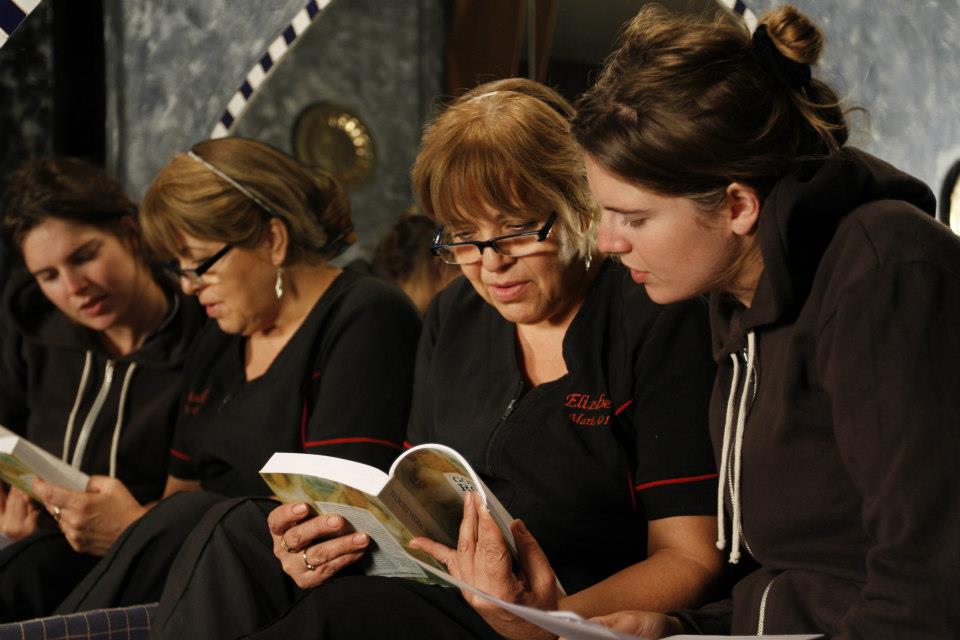
Four chambermaids tell their personal stories of love, marriage, relationships and life in The Women and the Passenger. They work at El Passjero a motel that rents rooms by the hour and refer to the ever changing guests as passengers. Housekeeping is always busy at motel El Passjero as check out time is more frequent than the 12-noon departure time one would expect at a normal hotel. The women also encounter different refuse to what is usually left in the standard hotel room. Each employee tells her story in a straight forward manner that is free of titillation or judgment of the guests that come to the hotel.
The film follows the women through their work day. Elisabeth recounts her split with her husband as she explores the various positions of the sex chair in the room that she's cleaning. Carina discusses the fact that her husband is younger than her and he was the popular kid in the neighbourhood when they met. Maria's been married for 33 years and seems to have the most stable relationship amongst the four. Patricia divulges that she is self conscious when she has sex with her husband because her kids sleep in the room next door.
Directors Patricia Correa and Valentina Mac-Pherson use several appealing shooting techniques in the film. The opening sequence of the women entering the change room to don their uniforms for the day is a long take without sound and extreme close ups on the women, their faces, their lockers, their uniforms and varying body parts. The shots where the women encounter hotel guest to bring them room service or other items is shot at a low angle from the far length of the hallway. We hear the conversations but never see any of the guests. Naturally there is also the regular sound of sexual activity emanating throughout the hotel.
The women give glimpses into their lives as they move throughout the hotel during the day. The interviews are conducted in the hotel rooms often with the subject lying on the bed or as in one memorable scene Elizabeth rolls around on a water bed as she recounts her reunion with her husband.
The women clean mirrors, change the sheets, fluff pillows, find the odd left behind trinket and clean up illicit substances in the rooms. The hotel is rich with colour which enhances the presentation. There is no shortage of neon at El Passjero especially red, green, purple and pink.
Women and the Passenger is an unconventional drama that answers a question that many people have when visiting a dodgy establishment. I wonder whose job it is to clean up this place? This Documentary is not for everyone but it's well done and deals with the subject matter without sensationalizing.
** 1/2 out of 4.
The Women and the Passenger | Patricia Correra /Valentina Mac-Pherson | Chile | 45 Minutes.
2013 Hot Docs Film Festival.
Tags: Love, Marriage, Relationships, Chile, Motel, Rent by the Hour, Blue Collar.
Monday, April 1, 2013
HRWFF-Putin's Kiss
Masha Drokova is known as the girl who kissed Putin. An enthusiastic young woman who has her own apartment in Moscow, her own automobile and is a leading member of Nashi a youth movement that supports the Russian leaders Putin and Medvedev. She is the face of the movement handling interviews at Nashi events and hosting a pro government talk show.
As the film opens Masha status in the movement continues to grow. It's a Nashi summer camp with thousands of students. Masha is deep within the inner circle and close confident of her mentor, Nashi leader Vasily Yakemenko. The students sing positive songs for the motherland and chant Go Russia Go. Danish Director Lise Birk Pedersen is very patient with his film. He follows Masha for 4 years and charts her involvement with the Nashi movement from the time she entered in her rural home town at age 16.
Drokova is part of a new Russian generation. She was born after the fall of the Soviet Union. Her generation is the future of Russia. This group sees Putin as a strong charismatic energetic and intelligent leader. The Country is in an unprecedented age of prosperity and growth that was not experienced by the generations before. The leaders and members of Nashi want to be part of this golden age.
Pedersen introduces modern Moscow with shots of the various billboards around the city showing modern western car ads, perfume ads and an ad for the Internet giant Google. A clever technique to quickly establish Moscow as a modern city with all the advantages and wealth equal to any Western European, Asian or North American local. Here we meet Masha Drokova's foil Oleg Kashin a cynical liberal journalist who is very anti-Nashi. He sees the danger in the movement as a political force for Putin; used to attack and demonize any opposition to the government. Pedersen also uses news footage of Putin along with still photographs of political meetings to deliver his message. Kasin as narrator describes how Russia was at Masha birth; poor, rundown and without many institutions. He talks of Putin's plan to return Russia's superpower status in the minds of the world but more importantly in the minds of the ordinary citizens. Kashin speaks about how under Putin the ordinary family could have a car and take a decent vacation. Nashi the democratic anti-fascist youth movement was a Putin creation to help to take control of all political activity. It's a very powerful organization with the ability to gather 30,000 youth to support Putin at an event and the public commitment to call out the opposition as enemies of Russia. Vasily Yakemenko tells the youth at a Nashi Conference that you need to be enraged and ready to sacrifice your past way of life for the cause. If not you should not attend the movements meetings or events. Mashka as their spokesperson was out front with Putin's messages condemning the actions of leaders of breakaway republics and the members of the Russian opposition. The goal being to show massive support for Putin's policies and measures.
Pedersen employs hand held camera work in many sections of the film. At the Nashi summer camp, the convention as when he follows Nashi members on their campaign to remove food with expired dates from store shelves. This positive camera friendly part is lead by Drokova while on the other side is the Battle Wing that uses violence and threats against opposition leaders and journalist. Pedersen interviews one of the leaders of this wing Aton Smirnov a Nashi commissar. They monitor the oppositions actions attend and disrupt their meeting and rallies to be sure that they cannot change the political stability of the country. The Battle Wing also engages in direct physical attacks on opposition leaders.
The action of the battle wing shown through security camera footage shot with grainy video as the faction perform the rudimentary acts against opposition leaders and journalist.
Masha involvement begins to wane after Vasily Yakemenko leaves for an official government post which triggers an election between Masha and the other 4 appointed federal commissars of Nashi.
She begins to take up other interests and start to spend time with a mixed group pro and anti-Nashi journalist that includes Kashin.
The left wing section of her new circle engaged in some anti government activities and were very vocal of their actions that brought a strong reaction from the authority and forced Masha to make some real decision about her continued involvement with the Nashi movement. This time the focus of the attack had not been some unknown enemies of Russia but people that Masha knew socialized and exchanged ideas with personally.
Putin's Kiss is a full look at the student movement in Russia. It touches on the positive effect that it has on Russian youth but also describes the function it has to suppress and marginalized the opposition using words, dirty pranks and on occasion real violence.
It is a documentary that tells the story of a government that bends the political potential of the countries youth in its direction. A tactic that has been used by many governments in the past sometimes leading to horrific consequences. The result is a film that I can recommend.
*** out of 4
Putin's Kiss | Lise Birk Pedersen | Denmark / Russia | 2012 | 85 Minutes.
2013 Human Rights Watch Film Festival.
Russia, Youth Movement, Teen Activist, Fascism, Totalitarian, Dictatorship
Monday, March 25, 2013
HRWFF- Camp 14 Total Control Zone
There are currently over 200,000 people in labour camps in North Korea. Citizens can end up in a labour camp for any number of reasons; violent acts, misdemeanour offences or for being opposed to the government. Some unfortunate prisoners end up in a camp for as minor a mistake as rolling a cigarette with a newspaper that happened to contain the image of the President.
The main character in Camp 14 total Control Zone did not end up in a camp through any of these ways. He was born there a son of two political prisoners who were wed by the guards. His mother was a present to his father for good behavior. No one is released from Camp 14 the only way out is death or escape.
In his opening conversation Shin Dong-hyuk discusses the nightmares that he has every night due to his ordeal at Camp 14. He is tired and exhausted all of the time and aims to rest as much as possible without thoughts as he does not want to think about anything. In the past he refused to do an interview on his time at the camp but now has finally decided to do so. He describes his first memory of the camp. He was 4 years old and went with his mother to see a public execution of another prisoner. Every prisoners had to attend a view the public executions the viewing was mandatory unless a prisoner is working in the mine. They took place in a big open area the victim was blindfolded and tied to a pole. The execution was always proceeded by a declaration that these prisoners did not work hard or follow orders and that is why they have to be punished. The prisoner was shot and then usually slumped forward. The whole prison was surrounded by barbed wire fence all the way up to the mountains. The guards area was also surrounded by barbed wire fence within the complex. Shin recounted that he lived in a one room home with his mother and had no furniture forcing them to sleep on the floor. In the winter it became so cold that they would put on all of the clothes they could find.
The interview with Shin in his apartment in Seoul is shot mainly with a fixed mid range camera. Shin sits on some steps his body leaning to the right. He speaks in hushed tones and looks down and to the left or away from the interviewer. He pauses often and the gaps between dialogue go on for a longer than normal length of time. Shin is also prone to blinking slowly during these pauses. His pose is a powerful image that shows a person that has endued a lifetime of suffering that has broken him both physically and psychologically. The room is shot mainly using natural light. The picture has a grainy texture which is appropriate for the bleak nature of the subject matter. Most of the outside shots are framed using a fixed camera. These shots are used for city views of Seoul with the occasional close up on Shin of he is in the frame.
The piece skips between the hustle of everyday Seoul and Shin's solitary existence in his apartment with minimal furniture that has an eerier resemblance to the one room home that he lived in for so long at the prison.
The flashbacks to the labour camp are all presented in understated black and white animation . The only bit of colour is the bright red North Korea flag. Ali Soozandeh animation is exceptional and very detailed of the prisoners and their surroundings. The opening shot of the labourers working in the mine with their pick axes shows Adults working alongside little children. The main job of the children was to push out the wagons that were loaded with coal by the adults. The children went to work in the mine at age 6 the same age as when they started school.
Director Mark Weise interviewed two former North Korea officers for the film. Young- Nam a former officer of the secret police service's Ministry of Internal Security and Kwon Huyk an ex commander of the guards from Camp 22. Huyn speaks to how easy it is to be arrested for as little as saying the names of the leaders Kim Il-Sung and King Jong Il without referring to either as Tongji comrade. Huyk divulged that he could do whatever he wanted to the prisoners. They could not defend themselves even if they were being beaten. It was his choice to kill any prisoner for any offence. Huyk explained how the two main forms of torture were water and fire and how he had a giant aquarium at his disposal to use on prisoners and play on the most basic fear of drowning or suffocation.
Young Nam revealed how arrests were always at night. Entire families were brought to a camp as political prisoners then split apart and never allowed to be together again. He also remarked how torture was normal in the political prison camps and even when a suspect was initially arrested. He discussed the different types of rewards that were given to the guards after the execution of a regular prisoner.
Weise uses several juxtaposed shots in the piece. The introductory shots of the two officers is cleverly edited centring on their mobile phones. Weise shoots Shin shopping in a modern Seoul mall and supermarket with flat screen T.V.'s and an abundance of food in every isle then flips back to animation of a food line as Shin describes the lack of foot in the camp. All they had was maze and Chinese cabbage soup. There was no meat unless they happened to catch a rat which they would eat bones and all. If you were caught hoarding food you were punished which more than likely meant you would be shot. The main way to keep the prisoners in line was the threat of execution not only if you disobeyed the rules but if you saw someone else do so and did not report the offence. The main other offences were attempting to escape, contact outside of work between men and women without permission or not being remorseful about your mistakes.
The film also follows Donghyuk current activities as he attends human rights events in Geneva, Seattle and Los Angeles to tell his stories from his life in the camp on behalf of the human rights organization LINK.
Shin gives an interesting theory of how he was a prisoner in south Korea until 2005 but did not have to think about money and had a pure heart while in the West people have to think about money all the time and are prisoners to their reliance on and constant pursuit of money. Camp 14 Total Control Zone is a horrific account of life in a labour camp for political prisoners. It is not an easy watch but one that I highly recommend.
Camp 14: Total Control Zone | Mark Weise | Germany / South Korea | 2012 | 104 Minutes.
*** 1/2 out of 4.
2013 Human Rights Watch Film Festival.
North Korea , Labour Camp, Prisoner, Torture , LINK, Speaking tour.
HRWFF- The Patience Stone
A slow tracking shot of a quiet room with curtains featuring birds brings us into Atiq Rahimi's The Patience Stone. The tranquil setting is violently interrupted by the loud concussion sound of a bomb gong off close by to our main setting. The blast is followed by gunfire that appears to be coming from just outside of a large double window of the room. The scene shifts to the two people in the room a young woman (Golshifteh Farahani) caring for an older man (Hamid Djavadan) who is lying motionless on his back on a flat mattress.
The woman prays over the man clutching prayer beads and implores him to attempt to try and hold his breath. He is breathing as his chest clearly rises and falls but not able to hear, respond or move. She is perplexed because the local Mullah advised that he would be moving and talking two weeks after the incident and they are now past that timeline. Young voices of the woman's children are heard outside of the room. They enquire about the man referring to him as their father while they also point out that there is no food in the home. The woman announces to her husband that she will go out and get more serum for his treatment hoping for a response but gets none.
The town is full of damaged buildings and dust as the woman and her children travel through the small village. She is refused medicine because she has not paid her account for a period of time. Instead upon her return home she rigs a makeshift I.V drip of sugar, water and salt then starts to reveal more information about her husband. He was injured an ongoing war engulfing the town and his injuries have rendered him in a vegetative state. All of the rest of her family have fled the town that is on the front line of the war. The woman repeatedly comments of the failure of Mullah to help her with her husband condition.
Soon the village is under attack and the towns people take refuge in underground cellars. The Husband has to be left in the room and the soldiers come in shouting at him at first then realizing his state ransack the house take some possessions of him and move on. Desperate the woman goes to find her Aunt (Hassina Burgan) and after two attempts at her old address discover her new location. She leaves her kids there and heads back to take care of her husband.
Now that her children are relatively safe she starts to tell her comatose husband her life story. She speaks of her childhood the harsh treatment of her father, her thoughts on their wedding his mother and the lust that his brothers had for her. He tells her things that she never would if he was conscious but feels free to do so as he is in this state. She discusses her actions with her Aunt and she relays the story of the Patience Stone a mythical stone that you can tell all of your painful stories to which the stone absorbs until one day it shatters leaving you free of all of your past problems.
Director Atiq Rhamini brings a fine adaptation of his 2008 prize winning novel to the screen. The piece starts of slow but as the woman begins to unburden herself with more stories that become increasingly detailed and personal the narrative builds to dizzying heights. The screenplay written by Rahmi and co writer Jean-Claude Carriere contains passages especially those delivered by the Aunt that are poignant and a strong commentary on the Muslim female experience. Her comments on how she responded to a husband that dismissed her because she was barren and the exchange with her niece when she discussed the deficiencies of one local solider are particularly strong portions of the script.
Cinematographer Thierry achieves a lot with a small room central area in the feature. His use of light coming through the large double window and how it reflects off the window frame and diffuses thought the curtains is especially sharpe. Thierry also uses the shadowing to represent the passing of time as the Woman recounts her story to her Husband. The colours are much brighter in the Aunt's house light greens, floral patterns and yellows make that setting more vibrant and alive as opposed to the Woman's home which is dark and pallid.
Rhamini keeps the scenes fresh in the main room through different shooting techniques he focuses in on the woman, the husband or object and in one shot when the Woman begins to share her intimate details he shoots her from behind and above. The majority of the bedroom scenes are shot in tight close up of the actors or important objects. The scenes in the village are shot from a distant fixed point with the actors moving in and out of the frame. One wonderful tracking shot follows the woman as she dresses to leave the home covers herself with the full burqa as she leaves her property followed by the camera that moves up and over the fence then perches at that vantage point as she heads into town.
The costumes in the piece are traditional. The woman wears a full burqa whenever she is out in public. If someone comes to the main window or to her gate she covers her head with a hijab. The soldiers are dressed in standard rebel forces uniforms, scarfed with their heads covered, guns and gun belts. The Husband is dressed in a traditional outfit. The Aunt's clothing is full of in bright yellows, reds, greens and she is clad in gold scarfs and traditional Afghan jewellery.
Music is scarce and when used is mainly based on traditional instruments. The pace of the score does pick up towards the end as the woman revels more and more intimate details to her incapacitated husband. The long shots of the town are often underpinned by traditional chanting. One scene as the woman leaves her home and walks through town is backed by a storyteller in town using a loudspeaker to tell the story of Khadija and how she wanted to help Mohammed open his eyes to reach his prophetical truth.
Towards the middle of the film the woman hears of an attack that is underway and she manages to get her husband into a covered area in the main room but is caught by two soldiers before she can escape. She tells them that she is a prostitute to avoid rape. The older solider hurls insults and they both leave. Later the younger solider returns pays and forces himself on the woman. An interesting part of the film is the evolution between the two and how the power shifts in the relationship.
The main location for the film is the room where the husband lays unmoving. The walls are in need of painting the furnishing sparse and after each attack the woman cleans up rubble and dust and rights the items that were over tuned by the blast . The next main set is the town. Built mainly with wood, stone and pieces of aluminum. It features dirt roads partially damaged buildings with rubble piled beside them and a small central square. Most townspeople push their wares around on carts and the occasional pick up truck speeds by with two or three soldiers in the bed. Conversations between neighbours are often through blown out holes in the walls that divide properties. A key feature of the main room is the large window. Often the action focus on people and conversations moving past the window and when the first group of soldiers come through they enter the home through the window. The woman often goes to the window and covers her head when visitors come by or to see if the water bearer has come that day.
Golshifteh Farahani gives an excellent performance as the woman. Her role is pivotal to the film and she delivers. The part is difficult as she spends the majority of the film acting against a character who is incapacitated therefore not speaking or responding. She alternates between wanting to care for him and wishing he would finally die on almost an hourly basis. Farahani brings one of the best acting performances of the year. Hassina Burgan is also strong as the Aunt A woman who has experienced and is very knowledgeable of how to make her way as a woman in a strict Muslim society and is always willing to pass on her wisdom. Massi Mrowat is very good as the young solider who is timid and bullied by his older counterpart. He begins as the aggressor in his relationship with the woman but that exchange grows and changes throughout the film.
The Patience Stone is a very watchable film that will spark discussion about the roles of men and women in Afghan society. There is strong commentary of both relationships between fathers and daughters and husbands and wives. A film that I can recommend.
*** out of 4
The Patience Stone | Atiq Rahimi | 2012 | France | 102 Minutes.
2013 Human Rights Watch Film Festival
Thursday, March 14, 2013
TBFF Film Review - Lucky
The title of the film is the direct opposite to most of the experiences of the main character in Dr. Avie Luthra film Lucky. The title character is a 10 year old boy who appears to be in the care of extended family members and looks out of places amongst the other members of his village. Shortly a casket is brought to the town with the remains of his mother who has died in the city from HIV/Aids. Refusing to eat which is a sign of respect for the recently deceased Lucky (Sihle Dlamini) decides to run away from his village and go to the city determined to obtain an education and enroll in school.
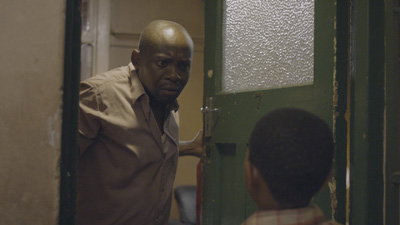
Once in town he heads to an apartment block where his Uncle Jabulani (James Ngcobo) resides. Lucky shows up at his Uncles door to a less than warm greeting. His Uncle does not recognize him at first but eventually invites him in to the small apartment and points to a worn couch for him to sit and sleep.
The next morning Lucky arises and asks his Uncle to take him to school. Uncle Jabulani says there is no money and heads to work leaving Lucky a tape that his mother made for him before she died. Left alone to fend for himself Lucky explores the apartment complex for a location to play the tape.
Wondering around the complex he overheads an elderly Indian woman Padra (Jayashree Basavra) being hassled by three young girls as she is trying to get water. Lucky goes to investigate and sees that the woman has a cassette player visible in her apartment. He sneaks into a store to obtain some water and brings it for her. She is very cautions at first but lets him in to her apartment. When her back is turned Lucky tries to leave with her cassette player only to be discovered and chased away.
Padma's mistrust of Africans is overtly displayed noting that the complex was once Indian and now has changed. She also notes the lack of ambition of the black adults in the community. However she grows to care for Lucky and despite the lack of a common language does her best to help him to succeed with the assistance of a taxi driver from the local stand that speaks English and Zulu. Padma has her own ulterior motives when she learns that the government will give her a monthly stipend for taking care of Lucky. The only stipulation being that he has to go to school which is strictly monitored.
Shot with an abundance of hand held camera work by cinematographer Willie Nel the film follows the title character around the streets of Durban as he tries to find his place in the city all the while bouncing from one misadventure to another. After his experience with is Uncle, Lucky realizes that the adults in his sphere will not be helpful and in fact are more likely harmful so he sets out on his own to find his way.
Writer Director Luthra who holds a doctorate in forensic psychology presents a film that is polar opposite from the expected path. A film with a 10-year-old Orphan as a central character would be expected to invoke sympathy towards the character building a rooting interest in the audience. Instead Lucky is very opportunistic and does friendly acts for his own purposes and advancement. At one point he even steals another boys school uniform to attend classes in a rival school during his travels around Durban and is downright cruel to Dumaisani (Vusi Kunene) his mother's the last friend and past boyfriend a man that could ultimately be his father.
The sets are the key to driving the events. The village with it's sparse buildings, fresh graves and featuring a fire pit as the town centre is a sharp contrast to the apartment complex in Durban that has a voyeuristic element where both Lucky and Padma lurk watching the actions of the other tenants using its open spaces to overhear conversations or track people as they come and leave the complex. The remote residence of Dumisani gives the impression of a solitary man that wishes to be left alone. The main set is the city of Durham itself as we follow Lucky around in his travels through out the city and the people he meets as he searches for his place in the world from students of a rival school to a gang of street kinds out near the railway tracks.
The two leads are well cast first timer Sihle Dlamini plays off the veteran actress who has been on stage since the age of 4. The best exchanges are when they try to communicate to each other neither speaking the others language. These interactions lead to delightful conversations where hand gestures and pointing come into play and sentences are repeated and activities demonstrated several times for emphasis.
Director Luthra gives comments on the new South Africa in this film. The film explores the racial tension between India and Africans once segregated are now living literally next door to each other. He also touches on the rural city split and the lack of education in the rural areas for children and knowledge of HIV/Aids. Luthra is a filmmaker with a message to deliver. I recommend this film but look elsewhere if your aim is a feel good story about a 10-year-old orphan.
*** out of 4
Lucky | Dr. Avie Luthra | South Africa | 2011| 100 Minutes.
Inaugural Toronto Black Film Festival.
Monday, March 4, 2013
Film Review - Stoker
Director Park Chan-wook makes his English language film debut with Stoker a psychological thriller centered on a high school girl (Mia Wasikowska) who has a distant relationship with her mother
Evelyn (Nicole Kidman) then suddenly looses her father in a car accident.
Park who is well known for his particular take on violence from films such as Oldboy and Sympathy for Mr. Vengeance presents his take on the dysfunctional American family.
India Stoker is a loner with a keen sense of nature. She sees insects and animals in slow motion, hears wind rustling through trees, fluttering of the wings of a fly or scurrying of a spider across the floor at a higher decibel. Her father Richard (Dermot Mulroney) noticed his daughter's unusual talents from an early age and took her hunting where they would spend hours on end waiting for the perfect moment to fell their prey. Her mother Evelyn could not compete with that bond. Now after Richard's death the two women are alone on their big country estate.
Although deeply in touch with nature India has the complete opposite experience at school. A very good student with a great eye for art she has no friends and is often taunted by the boys in her classes. She has two reputations: she does not speak nor does she want to be touched. However if confronted she will stand her ground.
The situation at the Stoker residence changes when Richard's brother Charlie (Matthew Goode) appears at the post funeral reception. Charlie is wordily has seen all corners of the globe picking up distinct skills in each of his ports of call. Learning this information is new to India, as she did not know until the reception that her Uncle even existed.
Longtime Park collaborator Chung-hoon Chung handles the cinematography duties a standout element of the film. Despite it's gothic ingredients Chung does not present a dark looking film it is instead extremely bright. The colours leap off the screen including the scenes at night, which are bottom or back lit in such a way to highlight the natural light. The sun is so bright in the daytime that characters often shield their eyes or require sunglasses. The appearance of and wearing of sunglasses is a popular theme throughout the piece.
After an initial avoidance India starts to become intrigued by her Uncle but at the same time her intuition tells her that something with him is off. Being a hunter use to being still and unseen, she moves around the estate often on the edge of conversations and exchanges amongst her family members and staff. India begins to develop a picture that Charlie is not what he seems which is heightened further when her Great Aunt Gwendolyn stops by and is genuinely uneasy in Charlie's presence.
Editing is directly used to tell the story. In one great sequence India is sent to the basement to put ice cream in the freezer. She tilts then releases an overhead light causing it to swing. Each arc cuts alternately from India downstairs to Charlie and Evelyn circling towards each other upstairs. Later as India combs her mother's hair they discuss her hunting trips with her father. The brush strokes of Evie's hair morphs into the long grass in a field by a lake where India and her Dad are stalking and waiting for the precise moment to fire on some ducks at the waters edge.
Sound is very important in a movie that focuses on heightened senses. The buzz of crickets and the swish of people moving through the tall grass are constant features of the film. In a flashback to Charlie's youth the depiction of a buzzing bee moving in slow motion outside a car window is a memorable moment. The score features a very haunting song for Charlie's introduction. The other main piece strongly attached to his character is a sad low whistling tune. Charlie and India also play a duet on the piano which is a key moment in the film as it marks the point where they become intellectually and physically close and represent a distinct shift in Charlie's interest from Evie to India.
The production went through many different casting changes as it made it's way to the screen but it in the end they got it right. Nicole Kidman pays the kids ruined my marriage role well. She is very direct and blunt with India. Some would even say at times she is cruel to her daughter. A lot of her best instants are a mix of disapproving looks entwined with longing gazes plus the vacant stare of a mother who is not quite present. Eva Wasikowska is more than capable in the lead role playing a character who knows she's different due to her fascination with all aspects of nature including seeing a wounded creature taking its last breaths. Matthew Goode is excellent as Uncle Charlie a charming man that attracts others easily enabling him to distract them from his true nature.
For a first film in a foreign tongue Park has delivered a gloriously twisted sinister production. The movie has several film noir elements and is based on the Hitchcock's Shadow of a Doubt with Joseph Cotton in the Uncle Charlie role. I definitely recommend the film and although the calendar just turned to March Stoker may hit some top ten lists at years end.
*** 1/2 Out of 4.
Stoker | Park Chan-wook | U.S.A. / U.K. | 2013 | 98 Minutes.
Evelyn (Nicole Kidman) then suddenly looses her father in a car accident.
Park who is well known for his particular take on violence from films such as Oldboy and Sympathy for Mr. Vengeance presents his take on the dysfunctional American family.
India Stoker is a loner with a keen sense of nature. She sees insects and animals in slow motion, hears wind rustling through trees, fluttering of the wings of a fly or scurrying of a spider across the floor at a higher decibel. Her father Richard (Dermot Mulroney) noticed his daughter's unusual talents from an early age and took her hunting where they would spend hours on end waiting for the perfect moment to fell their prey. Her mother Evelyn could not compete with that bond. Now after Richard's death the two women are alone on their big country estate.
Although deeply in touch with nature India has the complete opposite experience at school. A very good student with a great eye for art she has no friends and is often taunted by the boys in her classes. She has two reputations: she does not speak nor does she want to be touched. However if confronted she will stand her ground.
The situation at the Stoker residence changes when Richard's brother Charlie (Matthew Goode) appears at the post funeral reception. Charlie is wordily has seen all corners of the globe picking up distinct skills in each of his ports of call. Learning this information is new to India, as she did not know until the reception that her Uncle even existed.
Longtime Park collaborator Chung-hoon Chung handles the cinematography duties a standout element of the film. Despite it's gothic ingredients Chung does not present a dark looking film it is instead extremely bright. The colours leap off the screen including the scenes at night, which are bottom or back lit in such a way to highlight the natural light. The sun is so bright in the daytime that characters often shield their eyes or require sunglasses. The appearance of and wearing of sunglasses is a popular theme throughout the piece.
After an initial avoidance India starts to become intrigued by her Uncle but at the same time her intuition tells her that something with him is off. Being a hunter use to being still and unseen, she moves around the estate often on the edge of conversations and exchanges amongst her family members and staff. India begins to develop a picture that Charlie is not what he seems which is heightened further when her Great Aunt Gwendolyn stops by and is genuinely uneasy in Charlie's presence.
Editing is directly used to tell the story. In one great sequence India is sent to the basement to put ice cream in the freezer. She tilts then releases an overhead light causing it to swing. Each arc cuts alternately from India downstairs to Charlie and Evelyn circling towards each other upstairs. Later as India combs her mother's hair they discuss her hunting trips with her father. The brush strokes of Evie's hair morphs into the long grass in a field by a lake where India and her Dad are stalking and waiting for the precise moment to fire on some ducks at the waters edge.
Sound is very important in a movie that focuses on heightened senses. The buzz of crickets and the swish of people moving through the tall grass are constant features of the film. In a flashback to Charlie's youth the depiction of a buzzing bee moving in slow motion outside a car window is a memorable moment. The score features a very haunting song for Charlie's introduction. The other main piece strongly attached to his character is a sad low whistling tune. Charlie and India also play a duet on the piano which is a key moment in the film as it marks the point where they become intellectually and physically close and represent a distinct shift in Charlie's interest from Evie to India.
The production went through many different casting changes as it made it's way to the screen but it in the end they got it right. Nicole Kidman pays the kids ruined my marriage role well. She is very direct and blunt with India. Some would even say at times she is cruel to her daughter. A lot of her best instants are a mix of disapproving looks entwined with longing gazes plus the vacant stare of a mother who is not quite present. Eva Wasikowska is more than capable in the lead role playing a character who knows she's different due to her fascination with all aspects of nature including seeing a wounded creature taking its last breaths. Matthew Goode is excellent as Uncle Charlie a charming man that attracts others easily enabling him to distract them from his true nature.
For a first film in a foreign tongue Park has delivered a gloriously twisted sinister production. The movie has several film noir elements and is based on the Hitchcock's Shadow of a Doubt with Joseph Cotton in the Uncle Charlie role. I definitely recommend the film and although the calendar just turned to March Stoker may hit some top ten lists at years end.
*** 1/2 Out of 4.
Stoker | Park Chan-wook | U.S.A. / U.K. | 2013 | 98 Minutes.
Subscribe to:
Posts (Atom)