Reviews & Commentary on Film Festival Screenings, Select New Releases and Contemporary Foreign Film.
Thursday, May 9, 2013
Hot Docs 2013 Film Review - The Life and Crimes of Doris Payne
Opening at a San Diego Courthouse we meet Jean a senior citizen who's best friend is on trial for theft of an emerald ring from a Macy's department store. Her friend Doris Payne who is 81 years old and could easily be anyone's sweet grandmother. This is where Directors Matthew Pond and Kirk Marcolina catch up with Ms. Payne and begin to tell her life story.
Doris Payne grew up in West Virginia in the segregated south, born to a black father and a Cherokee Mother. Here father was abusive to her mother and Doris often saw and heard the results of their fights. As a reward for good grades her mother agreed to buy Doris a new watch. She was in the jewellery store trying on various pieces when a white man entered the store and demanded that she leave. During the confusion and commotion as the distracted Jeweller complied and turned Doris out he forgot that she still had on an expensive watch. Doris alerted the Jeweller at the doorway. The incident was the chance event that started her method of thievery, midsection and distraction.
In a series of interviews Payne tells the stories of her greatest heists starting with trains trips to Chicago and New York for jobs then switching to flights to Japan, London and Monte Carlo to apply her craft. Doris Payne is a fascinating subject. She draws you in with a smile, turn of phrase or a gesture. An exceptional actress she could play any role required to get into a position where she was alone with a disarmed sales clerk with thousands of dollars with of Jewellery laid out for her to inspect. In addition to the interviews the Documentary features recreations to support the narrative.
The Directors do not always glamorize the subject. They show the real daily life of the 81 year old Payne complaining of breathing problems but still continuing to smoke. She is living in a half way house where she has to check in and out and shares a room with a roommate. Even at a local fair she checks out the trinket rings and cant help her nature and walks away with one in her pocket. They focus in on the fact that if she is found guilty and has to serve 5 years the verdict would be just about a death sentence for Payne at her advanced age with her current medical conditions. She has two children a son who has a history of drug problems and a daughter who agreed to be interviewed but her identity is kept hidden.
The Life and Crimes of Doris Payne is captivating look at a life long a jewel thief who is on trial for her life. Payne a masterful manipulator and charmer swears that she didn't do it and wants her day in court. She also claims to have stolen 2 million dollars in Jewellery and spent every penny. This is a documentary driven by the feisty personality of a singular individual and a film that I can recommend.
*** out of 4.
The Life and Crimes of Doris Payne | Matthew Pond and Kirk Marcolina | 2013 | U.S.A. | 73 Minutes.
2013 Hot Docs Film Festival.
Tags: Crime, Jewel Theft, Segregation, Heists, Jet setting, Court Case.
Wednesday, May 8, 2013
Hot Docs 2013 Film Review - Muscle Shoals
There's something in that mud declares Bono in the opening interview of Muscle Shoals. The area hits musicians in the gut to drag out songs anchored by deep base guitar and base drums. As Bono speaks of the region Director Greg Camalier switches to a shot of the Tennessee River that runs through the town followed by a view of the deep rich thick forests and woods in the area. Chalked full of just most major artists in the U.S from the early 60's through the mid 70's plus a few A listers from across the pond. Muscle Shoals was a destination that the leading acts of the day felt that they had to get to and record music. As one major act left the next one landed to take their place. It's a place that's all about the music, musicians are left alone its pretty quiet and hard to be distracted. The bands travelled from the studio to the hotel and could focus on their craft.
So how does a sleepy Alabama outpost become a must for Musicians ranging from Wilson Pickett to Aretha Franklin to the Rolling Stones? The Muscle Shoals Sound is the vision of producer Rick Hall the founder of FAME Recording Studios. Hall opened the studio and recruited local musicians who were playing around town or just fresh from doing high school or square dances to form the Fame Rhythm Section. It was Hall's idea to mike the base drum separately which had never been done before. Hall's life story is full of personal tragedy it appears that he put the tragedy's aside and focused on the music and the studio gaining the reputation as a legendary taskmaster that would push for that perfect sound. He couldn't always articulate what he wanted but knew when he heard it and if it took 40 attempts to get there then thats what they did.
The first international hit artist for Fame Studios was Percy Sledge. Percy was from nearby Leighton, Alabama and had picked cotton in the fields and worked as an orderly. He came into the studio and began to sing as he had always done in the field the sessions at Fame let to When a Man Loves a Woman. Sledge was followed by Wilson Pickett then Aretha Franklin a new Atlantic Artist who was sent to Muscle Shoals to work with Hall due to his deal with the label. The resulting sessions led to I'd Never Loved a Man (The Way I Loved You) and eventually the Fame Rhythm Section also known as the Swampers headed to New York to finish her album backing Franklin on one of the most classic soul albums of the 60's that included her biggest hit Respect.
The dynamic in the studio was polar opposite to the reality of the time. Alabama is the State where Governor George Wallace stood in the schoolhouse door and black people had to address white citizens as Mr. and Mrs. In the Fame studio none of that existed. Everyone worked together equally to get to the music leading to a white rhythm section that played on many of the biggest soul records from the mid 60's through the mid 70's.
The essence of the film are the songs themselves and the old footage and photos from the recording sessions. The piece is full of classic music: Wilson Picket's Land of a 1000 Dances and Mustang Sally, the Rolling Stones Wild Horses and Brown Sugar plus The Staple Singers I'll Take You There to name a few. Not to be missed is The Wilson Pickett / Duane Allman impromptu version of Hey Jude that Rick Hall labeled the start of Southern Rock due to Dwayne Allman's slide guitar work on the track.
Muscle Shoals is joyful ride that will delight the senses. Beautifully shot with the blues of the Tennessee river, the browns of the swamp and the mud plus the lush greens of the forest and hills surrounding the town. As the line goes from Sweet Home Alabama: Now Muscle Shoals has got the Swampers/And they've been known to pick a song or two. Audience Members will be keeping beat to the music throughout the film and leave the theatre singing or humming one or two of the many legendary songs.
**** out of 4.
Muscle Shoals | Greg Camalier | U.S.A. | 2013|111 Minutes.
2013 Hot Docs Film Festival.
Tags: Soul Music, Alabama, Muscle Shoals Sound, Biography, Southern Rock, Music Industry Politics.
Tuesday, May 7, 2013
Hot Docs 2013 Film Review - Valentine Road
Oxnard California is a town that in the past was only really known to its residents. It was a sign on the highway on the way to Los Angeles that might catch a motorist's eye on the trip into the big city. The events of February 12th 2008 brought the town to national attention and changed the lives of many community members forever.
Director Martha Cunningham crafts a riveting film starting with eyewitness accounts from the grade 7 and 8 students that were in the computer class on that fateful day. The students recount arriving at school that morning remembering that it was a typical day. Then many heard a pop which they thought may have been a balloon only to realize that one of their classmates Lawrence Larry King a 15 year old LGBT student had been shot then the shooter fellow classmate Brandon McInerney dropped the weapon and fled the classroom. Next we move to the police drawings of the classroom showing where each student was seated at the time of the shooting with King and McInerney's names printed in bold followed by the crime scene pictures of the room itself in raw detail.
What develops after the shooting is an extremely polarizing case. The first aspect was how would the prosecutors handle the case? California had a new law on the books proposition 21. The law was aimed at gang members. The gangs had figured out long ago that as long as their violent actions were carried out by members14 years of age or younger they would be tried as a juvenile, which meant shorter and easier sentences. Prop 21 gave the courts the option to try 14 year olds as adults for murder. The next question was whether or not this was a momentary loss of reason by a kid that felt he had no other option to ward off unwanted advances from a classmate or a well thought out pre-meditated hate crime. The State and law enforcement believed that this was a hate crime and McInerney should be tried as an adult and entered charges to that effect.
Cunningham uses a lot of closed circuit video from the school, police interrogation and prison cameras as part of the movie. The documentary also points to the slow speed of justice in California, as it is 3 years of delays and appeals until the case finally goes to trial. Cunningham also takes every opportunity to highlight the beachfront nature of Oxnard. She uses shots of the beach, sand and surf in many transition shots along with one spectacular frame of a California sunset.
Along with the eyewitness accounts of the students in the class the presentation includes several first person accounts from friends and family on both sides. Since Larry was adopted most of his story is told by classmates, a good friend from his group home and the teacher from the class in which the event occurred. Brandon's girlfriend, half brother and mother tell his story.
Despite appearing to be polar opposites the two boys had a lot in common. Friends on both sides recounted evidence of physical abuse on both boys. Larry was adopted had a legal guardian and had lived in a group home. Brandon was living with his grandfather, as his father was very violent while his mother went in and out of rehab with her drug problems.
The last aspect of this film that is a recurring theme in these type of cases is the tactic of putting the victim on trial. As the court case progresses the comments and actions of grown adults will leave the audiences speechless and shaking their heads.
Valentine Road is a highly charged presentation that will affect audiences emotionally. It's a film that I can highly recommend and once viewed will compel audience members to start a conversation with your friends, family and community as a whole.
**** out of 4.
Valentine Road | Marta Cunningham | U.S.A | 87 Minutes.
Hot Docs 2013 Film Festival.
Tags: Murder, Hate Crime, Jury Trial, LGBT Youth, California Laws, School Shooting, Beach Community.
Hot Docs 2013 Film Review - Blackfish
The screen is dark the date February 24, 2010, flashes up briefly followed by crackling then a panicked voice is heard over the telephone line. There has been an accident at Sea World. One of the trainers has been injured severely help is needed right away. The trainer in question Dawn Brancheau had been dragged into the water by Killer Whale Tilikum .
To find out the reasons for the occurrence Director Gabriela Cowperthwaite takes us back to the past to learn the background of Killer Whales in captivity and by extension the story of Tilikum starting with the 1970 Killer Whale capture in Puget Sound Washington. The Orcas were chased by boat and helicopter each group having their own tactics for and to avoid capture. The hunters eventually honed in on the mothers and children. The young whales being the ultimate targets.
Next the scene shifts to the Norwegian Sea off the East coast of Iceland for footage of the 1983 capture of a then 3 year old Tilikum. The documentary continues to build Tilikum's history detailing his time at Sealand a park near Victoria B.C. where he spent three quarters of the day in a 20-30 unlit steel box with two larger female whales that bit and poked at him constantly.
It was at Sealand where Tilikum had his first serious incident with a trainer. A former Sealand trainer and two eye witnesses of tell the story of the February 21, 1991, death of trainer Keltie Byrne who lost her footing and fell into the tank with the whales. She was passed back and forth between the whales and eventually drowned. The trainer and witnesses are visibly upset as they present the facts of the case. Shortly after the incident the park shut down Tilikum was sold to SeaWorld.
The Documentary is full of first party accounts from former SeaWorld employees on the conditions at the park, the near misses and the aftermath of the Dawn Brancheau incident. The Trainers are all at first thrilled to have worked at Seaworld describing it as their dream job. However as they see how the Orca's are treated, the fact that they often do not get along and how the company line on their lives differ drastically from similar animals in the wild they change their minds. Contrary to Sea World jargon it is not normal for a Killer Whale to have a collapsed dorsal fin. Killer Whales do not live for 25-30 years as described by Sea World staff but instead in the wild the males can live to 60 and the females to 100.
The most fascinating aspects of the piece are the motion capture recordings of incidents and close escapes. The most dramatic being the 2006 near drowning attack on trainer Ken Peters by killer whale Kasatka. A chilling piece of video that shows Kasatka holding one of Peters' feet in her mouth then repeatedly bringing him down under the water until he is able to calm the whale down and swim to safety. The response of the trainers to these incidents is even more incredible. They are not panicked or slowly realizing that they are about to die. Rather they are upset at the Orca thinking why are you doing this I thought we had a relationship. More likely as some of the former SeaWorld employees have now come to realize the whales were just doing as directed to get fish knowing if they did not they would not get fed.
Blackfish is a well presented piece that provides accounts from park staff, whale experts and safety experts on the marine park industry. This is a multi billion dollar industry that is based on animals in unnatural living environments and the work of trainers who are unaware or blind to the dangers they face on a daily basis. It's a film that I can definitely recommend.
*** 1/2 out of 4.
Blackfish | Gabriela Cowperthwaite | U.S.A. | 83 Minutes.
Hot Docs Film Festival 2013.
Tags: Killer Whale, Orca, Sea World, Whale Human Attack, Animal Cruelty, Whale Hunting.
Hot Docs 2013 Film Review - Rent A Family Inc.
Director Kaspar Astrup Schroder came up with the idea for Rent a Family Inc. on one of his many trips to Japan. He was looking through the classifieds and noticed the unusual items that were available for rent. The papers had dogs that could be rented for an hour to take them for a walk in the park. The paper also had a section for renting people. Intrigued Schroder contacted Ryuichi who owned a business I Want To Cheer You Up Ltd. The business is run though a web site and a cell phone. Ryuichi will rent himself out as a father, husband, boss, colleague or even get together a group to serve as one side of the family for a wedding.
Ryuichi is the father of two boys who does not have a great relationship with his family. He hardly speaks to his wife. They live in small cramped quarters outside of Toyko. His oldest son now sleeps with his mother in the bed that Ryuichi bought for himself so he could get a good nights sleep. Father's day goes by each year unnoticed while mother's day is a big deal in the household. His family had no idea about his business. His wife does not care what he does as long as he brings home money to support the family. The only affection that Ryuichi gets at home is from the small family dog Chappi.
Schroder interviews Ryuichi using a one camera shot with the questions coming from out of the frame. Ryuichi admits that he is lonely and has thoughts of suicide. Money is always an issue and if he dies his family would get to keep the home. His wife is interviewed in the same fashion using a Japanese translator. She recounts that the only way she knows that he has changed jobs is based on the new delivery company uniform that she finds in the wash. Schroder also injects Japanese shows into the film one of which has Ryuichi on as a guest, identity hidden to give details of his business. The shows are loud, extremely busy, visually stimulating and speak to the main social and cultural issues of the day.
The film recounts four I Want to Cheer You Up assignments. In the first Ryuichi plays the new husband of a woman that wants her ex to pay child support and give her control of the funds. Her ex had always refused to do so in the past but with Ryuichi playing the role of the new husband and pointing out that he has to take on responsibility for the children the ex agrees to let the client control the funds for the kids.
The most elaborate job is the assignment to provide the entire brides side of a wedding. Ryuichi plays an Uncle of the bride and a highlight of the film is the group going over their roles on the train ride to the wedding getting their names and back stories straight. The wedding goes off with a few hitches and mistakes but the troop are generally moved by the ceremony many crying at the event.
Rent a family Inc is a unique look into Japanese culture. The need for individuals to seek approval from others and an underlying tone that people are aware that something is not right with the situation but go along to get along. It's a film that I can recommend.
*** out of 4
Rent a Family Inc. | Kaspar Astrup Schroder | Denmark | 2013 | 77 Minutes.
2013 Hot Docs Film Festival.
Tags: Classifieds, Renting people, Stand Ins, Secret Job, Dysfunctional Family, suicide, Japanese culture, Japanese Television.
Hot Docs 2013 Film Review - The Women and the Passenger
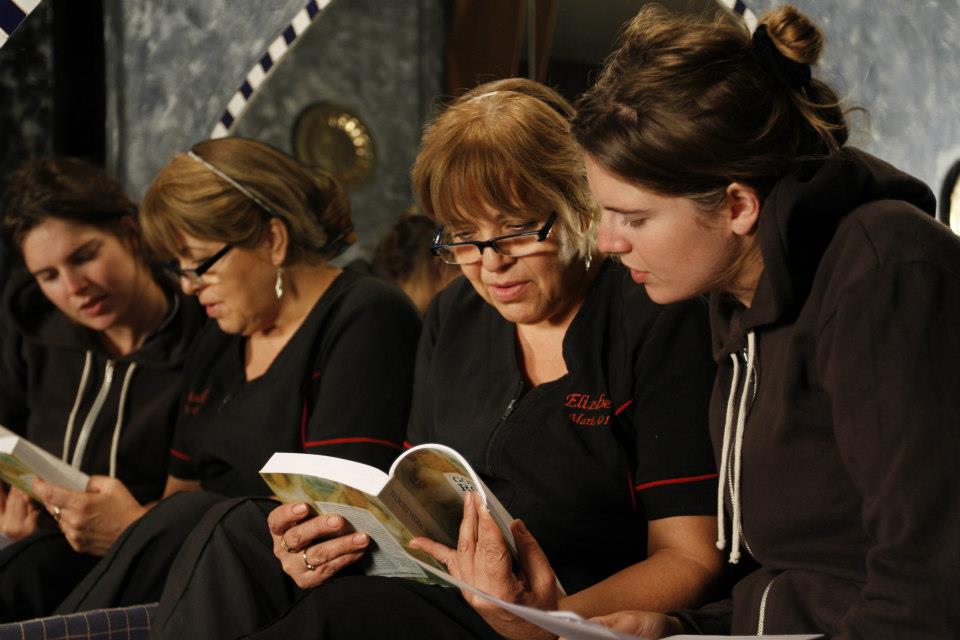
Four chambermaids tell their personal stories of love, marriage, relationships and life in The Women and the Passenger. They work at El Passjero a motel that rents rooms by the hour and refer to the ever changing guests as passengers. Housekeeping is always busy at motel El Passjero as check out time is more frequent than the 12-noon departure time one would expect at a normal hotel. The women also encounter different refuse to what is usually left in the standard hotel room. Each employee tells her story in a straight forward manner that is free of titillation or judgment of the guests that come to the hotel.
The film follows the women through their work day. Elisabeth recounts her split with her husband as she explores the various positions of the sex chair in the room that she's cleaning. Carina discusses the fact that her husband is younger than her and he was the popular kid in the neighbourhood when they met. Maria's been married for 33 years and seems to have the most stable relationship amongst the four. Patricia divulges that she is self conscious when she has sex with her husband because her kids sleep in the room next door.
Directors Patricia Correa and Valentina Mac-Pherson use several appealing shooting techniques in the film. The opening sequence of the women entering the change room to don their uniforms for the day is a long take without sound and extreme close ups on the women, their faces, their lockers, their uniforms and varying body parts. The shots where the women encounter hotel guest to bring them room service or other items is shot at a low angle from the far length of the hallway. We hear the conversations but never see any of the guests. Naturally there is also the regular sound of sexual activity emanating throughout the hotel.
The women give glimpses into their lives as they move throughout the hotel during the day. The interviews are conducted in the hotel rooms often with the subject lying on the bed or as in one memorable scene Elizabeth rolls around on a water bed as she recounts her reunion with her husband.
The women clean mirrors, change the sheets, fluff pillows, find the odd left behind trinket and clean up illicit substances in the rooms. The hotel is rich with colour which enhances the presentation. There is no shortage of neon at El Passjero especially red, green, purple and pink.
Women and the Passenger is an unconventional drama that answers a question that many people have when visiting a dodgy establishment. I wonder whose job it is to clean up this place? This Documentary is not for everyone but it's well done and deals with the subject matter without sensationalizing.
** 1/2 out of 4.
The Women and the Passenger | Patricia Correra /Valentina Mac-Pherson | Chile | 45 Minutes.
2013 Hot Docs Film Festival.
Tags: Love, Marriage, Relationships, Chile, Motel, Rent by the Hour, Blue Collar.
Monday, April 1, 2013
HRWFF-Putin's Kiss
Masha Drokova is known as the girl who kissed Putin. An enthusiastic young woman who has her own apartment in Moscow, her own automobile and is a leading member of Nashi a youth movement that supports the Russian leaders Putin and Medvedev. She is the face of the movement handling interviews at Nashi events and hosting a pro government talk show.
As the film opens Masha status in the movement continues to grow. It's a Nashi summer camp with thousands of students. Masha is deep within the inner circle and close confident of her mentor, Nashi leader Vasily Yakemenko. The students sing positive songs for the motherland and chant Go Russia Go. Danish Director Lise Birk Pedersen is very patient with his film. He follows Masha for 4 years and charts her involvement with the Nashi movement from the time she entered in her rural home town at age 16.
Drokova is part of a new Russian generation. She was born after the fall of the Soviet Union. Her generation is the future of Russia. This group sees Putin as a strong charismatic energetic and intelligent leader. The Country is in an unprecedented age of prosperity and growth that was not experienced by the generations before. The leaders and members of Nashi want to be part of this golden age.
Pedersen introduces modern Moscow with shots of the various billboards around the city showing modern western car ads, perfume ads and an ad for the Internet giant Google. A clever technique to quickly establish Moscow as a modern city with all the advantages and wealth equal to any Western European, Asian or North American local. Here we meet Masha Drokova's foil Oleg Kashin a cynical liberal journalist who is very anti-Nashi. He sees the danger in the movement as a political force for Putin; used to attack and demonize any opposition to the government. Pedersen also uses news footage of Putin along with still photographs of political meetings to deliver his message. Kasin as narrator describes how Russia was at Masha birth; poor, rundown and without many institutions. He talks of Putin's plan to return Russia's superpower status in the minds of the world but more importantly in the minds of the ordinary citizens. Kashin speaks about how under Putin the ordinary family could have a car and take a decent vacation. Nashi the democratic anti-fascist youth movement was a Putin creation to help to take control of all political activity. It's a very powerful organization with the ability to gather 30,000 youth to support Putin at an event and the public commitment to call out the opposition as enemies of Russia. Vasily Yakemenko tells the youth at a Nashi Conference that you need to be enraged and ready to sacrifice your past way of life for the cause. If not you should not attend the movements meetings or events. Mashka as their spokesperson was out front with Putin's messages condemning the actions of leaders of breakaway republics and the members of the Russian opposition. The goal being to show massive support for Putin's policies and measures.
Pedersen employs hand held camera work in many sections of the film. At the Nashi summer camp, the convention as when he follows Nashi members on their campaign to remove food with expired dates from store shelves. This positive camera friendly part is lead by Drokova while on the other side is the Battle Wing that uses violence and threats against opposition leaders and journalist. Pedersen interviews one of the leaders of this wing Aton Smirnov a Nashi commissar. They monitor the oppositions actions attend and disrupt their meeting and rallies to be sure that they cannot change the political stability of the country. The Battle Wing also engages in direct physical attacks on opposition leaders.
The action of the battle wing shown through security camera footage shot with grainy video as the faction perform the rudimentary acts against opposition leaders and journalist.
Masha involvement begins to wane after Vasily Yakemenko leaves for an official government post which triggers an election between Masha and the other 4 appointed federal commissars of Nashi.
She begins to take up other interests and start to spend time with a mixed group pro and anti-Nashi journalist that includes Kashin.
The left wing section of her new circle engaged in some anti government activities and were very vocal of their actions that brought a strong reaction from the authority and forced Masha to make some real decision about her continued involvement with the Nashi movement. This time the focus of the attack had not been some unknown enemies of Russia but people that Masha knew socialized and exchanged ideas with personally.
Putin's Kiss is a full look at the student movement in Russia. It touches on the positive effect that it has on Russian youth but also describes the function it has to suppress and marginalized the opposition using words, dirty pranks and on occasion real violence.
It is a documentary that tells the story of a government that bends the political potential of the countries youth in its direction. A tactic that has been used by many governments in the past sometimes leading to horrific consequences. The result is a film that I can recommend.
*** out of 4
Putin's Kiss | Lise Birk Pedersen | Denmark / Russia | 2012 | 85 Minutes.
2013 Human Rights Watch Film Festival.
Russia, Youth Movement, Teen Activist, Fascism, Totalitarian, Dictatorship
Subscribe to:
Posts (Atom)