Sunday, May 11, 2014

Hot Docs 2014 Film Review - The Agreement

Yugoslavia broke up into several smaller countries in the mid to late 1990'. Border disputes have long been settled amongst most of the countries except for territory between Kosovo and Serbia. Serbia was the heart of the former Yugoslavia united Baltic States and includes the former capital Belgrade.  Kosovo is the last state trying to formally distance themselves from the old regime. Kosovo's northern territory features 4 areas that are mainly Serbian. The dispute between the two has some similarities to the current dispute in the Ukraine that mainly centres around Crimea a part of the Ukraine that has a mainly Russian population.


The task to reach an Agreement between the two sides falls to Chief U.N.  negotiator Robert Cooper. Cooper a history junkie full of timely antidotes from the past and a habit of multiple tie changes per day knows the relationship between the two factions is so volatile that recognizing Kosovo's independence is not even on the table.  Instead if they can agree on a border and establish an independent voice for Kosovo in local affairs Serbia can begin the process of joining he European Union.

Director Karen Stokkendal brings the viewer directly to the negotiation table. The proceedings are  tense, dry, procedural, sarcastic and surprisingly funny The action is driven by the two delegation leaders Edita Tahiri for Kosovo and Borko Stefanovic for Serbia. The camera follows each to their home base. Stokkendal camera explores the building where former teach Tahir hid during the Balkan War when the Serbs were hunting her. Stefanovic speaks of his former days in a rock band and gets his former mates back together for a song for the production.


The tedious nature of back and forth negotiations are keenly followed in the piece. Leaving the table, the room, the building and the country is used as a tactic. Shutting off communications all together is another tool used as well. How discussing actions of the past easily open old wounds or the inclusion of one word in the final draft can almost derail the negotiations entirely. All the while Cooper plays the role of Mediator keeping the negotiations somewhat on track browbeating a side when needed but also realizing that letting people vent is required to get to the next point.

The Agreement is a captivating presentation that appears at times to be a cross between high stakes poker and a game of chicken. Then on other occasions appears to feature adults acting like 4 year olds that can't play together in a sand box. It's history unfolding before Stokkendal's lens. With the current events in the Ukraine one wonders if a companion piece featuring Cooper may be in the offering for that conflict in the near future.

*** 1/2  Out of 4.

The Agreement |Karen Stokkendal |Denmark/Serbia & Montenegro/UK/Serbia/Belgium| 2013|58 Minutes.

Tags: Negotiations, Diplomacy, Balkan Wars, European Union, United Nations, Brussels, Serbia, Kosovo.

Friday, May 9, 2014

Hot Docs 2014 Film Review - Whitey The United States of America vs James J. Bulger.

The first person on screen is an extortion victim. He is an elderly man but as he tells his account it is easy to see that these events are fresh in his mind as if they just occurred yesterday. As liquor storeowner he was confronted at his first door by Bulger and an associate. He is told that the men are here to kill him but they don't want to do it. Instead they will become his partners. When the victim protests his family is brought into the equation. The main think he remembers is Bulger standing in is doorway grinding his teeth and appearing that he was ready to do just about anything.


Director Joe Berlinger presents an all encompassing piece on Buglers life centred around the trial that commenced on June 12, 2013. The documentary features a unique interviewing style of the main players. They mainly told their story as they were driving to and from the courthouse. The courthouse itself was another character in the story with many overhead sweeping shots of the building use to signal the next day of testimony starting then to end the events of the day. Since the production team was not allowed to film their main subject overhead shots were also used of the prison to situate Bulger along with conversations with his legal team that were voiced in reenactments.

The piece focused on three relatives of the 19 victims that Bulger was accused of killing. Steve Davis the brother of Debra Davis, Michael Donahue's wife and son Patricia and Tommy Donahue and son and the afore mentioned liquor store owner Stephen Rakes. The relatives tell the story of their loved ones how their murders gong back 30 years still effect them daily and how that are looking forward to their day in court a chance to face Bulger face to face and the unexpected opportunity for Justice.


The documentary uses excellent devices to transition from the present to the past. An overhead shot of a Boston neighbourhood in colour that changes to black and white as details of Bulgers past life are presented on screen.

The main question of the Documentary is how Bulger the reported leader of the Winter Hill Gang had  never been charged by the police. Was it because he was a F.B.I. informant under the care of John Donnelly or was he as Bulger presented a powerful local boy who paid off the F.B.I., Local Police and the States Attorney's office to be left alone. Berlinger presents the information on film that shows three corrupt levels of policing who were defacto Winer Hill Gang members and who all except for Donnelly got away with their entanglement with Bulger scott free.

Whitey: The United States of America v. James J. Bulger is a dense presentation that features a lot of interwoven material. The film is greatly helped by the soundtrack that helps to keep the viewer engaged and the story moving. The episode the still pretty fresh from the newspaper pages and Bulger has been the direct or implied subject in media and film projects before but Berlinger has crafted a valuable take on an underworld figure that is seen in some circles as a popular folk hero.

*** out of 4.

Whitey: The United States of America v. James J. Bulger | James Berlinger |  U.S.A. | 2014| 120 minutes.

Tags: Crime, Trial, Boston, Murder, Extortion, F.B.I. , States Attorney's Office, Department of Justice, Winter Hill Gang.


Monday, May 5, 2014

Hot Docs 2014 Film Review - The Overnighters

We first meet Pastor Jay Reinke as he walks through what appears to be a dorm knocking on doors to wake up individuals who appear to be all males and making the viewer think that this could be a teacher or coach waking up students or players for an activity. Then he continues through the halls the sleepers continue to be males but are obviously too old to be students confusion begins to set in.  Finally as he heads outside to wake people up in their cars all early suppositions are lost.

This is the introduction to director Jesse Moss' The Overnighters. The tough U.S economy, extreme unemployment in many States, and desperation amongst the down and out lead thousands of people to Willston, North Dakota. The State features the fastest growing economy in the Union skyrocketing  housing and food prices along with plenty of jobs in the oil fields as fracking is booming in the area.


The migrant workers many of whom are from the lower rungs of society, some with criminal records have a polarizing effect on the community.  They are not invested as most have family members back home in other states. Violence is on the uptick and the local paper fuels the fire glorifying any and all transgressions in the migrant community both big and small.

Director Jesse Moss first came across this subject from an economic and business sense. The North Dakota oil boom is due to hydraulic fracturing. The new technology meant business and employment drawing men from all over the country to the state seeking employment. But once in the state he read an article from Pastor Reinke drawing him to his Concordia Lutheran Church in Willston to chart a different type of story.


Pastor Reinke is a fascinating character as the majority of the town closes their doors and shuts their blinds to the visitors he champions the notion of love thy brother doing whatever he can to help these men out. He lays out a simple set of rules for the men upon arm stances surrounding rival then does all that he can along with is family to be an advocate. He even takes a worker to his home on occasion when their past is too controversial for them to stay at the church and potentially jeopardize the Overnighters program.

Moss focuses his lens on a half a dozen men. Some have a lack of success in the beginning then find steady work. Others get hired on right away and some don't have any luck at all finding work. But at the heart of the piece is the realization of all involved that Willston is not their home, they are all just passing through and despite a strong supporter like Paster Reinke it is very hard today in the United States to pull oneself up from the lower levels of society despite being willing to go anywhere in the country for work especially if you have a serious mark against you name from past actions.

*** 1/2 out of 4.

The Overnighters | Jay Moss | U.S.A. | 2013 | 101 Minutes.

Tags: Fracking,  Oil Boom, Sexual Offender, Adultery, Lutheran Church, North Dakota, Migrant Workers.


Hot Docs 2014 Film Review - The Last Season

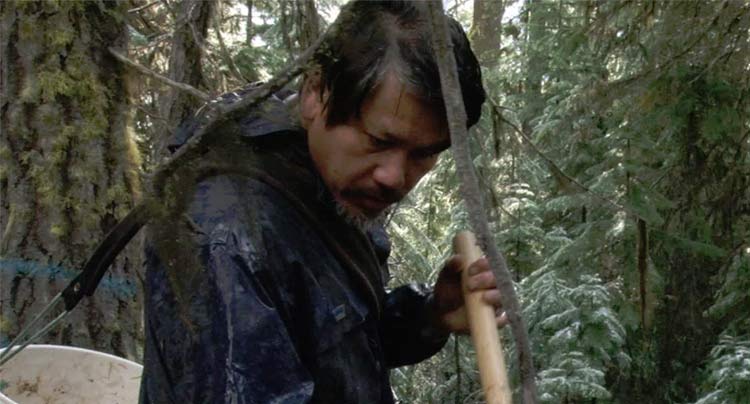
The Matsutake mushroom is a sought after delicacy in Japan. It is a top dollar item in Japanese cuisine that is fond in abundance it the most unlikely place Chemult, Oregon. Every fall until the first real snowfall is hunting season.  The participants are mainly from Cambodia, Thailand and Laos with a sprinkling of local pickers.  The focal point of the hunt is known as Mushroom Camp where the workers live, play traditional music, celebrate the Buddhist fall holidays, Karaoke and bring in the days work for weighing.

Director Sara Dosa builds a multi layered production that constantly unearths new information as it progresses. The piece features several sequences of hand held camera work as the action follows the main players as they hunt through the Oregon woods in search of the prized fungus. Dosa also mixes in archival footage of the main events from the past that shaped the lives of the two main protagonists. Kouy Loch and Roger Higgins.


Loch, a Cambodian refugee who fought against the Khmer Rouge has been coming to Chemult from Southern California for years for the fall mushroom picking season. His style is slow and plodding. Armed with is trusty walking stick he scours the forest for that special mushroom that depending on weight, shape and appearance could be worth up to $1500.  He is trying to provide for his 7 year old daughter Jeanette while living with the effects of the war in Cambodia and what it did to his family and himself.  Roger Higgins is a Vietnam veteran who served in the early days of the conflict back in 1963. He is now weak and on a breathing apparatus having abused alcohol for decades trying to rid himself of the nightmares of what he saw and did during the war 50 years before. The two met in the Mushroom Camp 6 year prior starting with small talk they realized that they both had similar South Asian war time experiences and modern day struggles leading to a bond of friendship. Then more as their relationship grew and changed again after Loch's mother his last family connection passed.

Dosa brings the viewers into the world and culture of mushroom picking. The ups and downs of the hunt. The pricing of the daily haul based solely the daily Japanese Stock Market price. The camera catches the nightly activities in the camp plus the set up for and pageantry of two Buddhist ceremonies. However, the main focus of the Documentary is the relationship between two men with decades old scars from war that have ravaged each both mentally and physically. Dosa digs deep into this relationship between the two who met in the most unlikely of places and ultimately help each other to heal as their relationship grows.

*** 1/2 out of 4.


The Last Season | Sara Dosa | U.S.A. | 2014| 93 Minutes.

Tags: Matsutake Mushroom, Oregon, Khmer Rouge, Vietnam, Sniper, PTSD, War, Family, Cambodia, Buddhist.

Thursday, May 1, 2014

Hot Docs 2014 Film Review - Ne Me Quitter Pas


Opening with a heart wrenching scene chronicalling the death of a marriage Ne Me Quitte Pas sets the tone early for the viewer makes them well aware that this documentary about two older men drinking constantly in the woods will not be a feel good story.

We first meet Marcel and his wife as they discuss their separation. The couple has three small children meaning that their decision will have a significant impact on 5 lives in total. Marcel is clearly not ready to end the marriage as he makes fleecing half joking attempts for one more intimate encounter.


The piece moves ahead to the other main character Bob who has picked out a tree where he wants to be near when he carries out his plan to kill himself. Marcel now sensing that he has nothing to live for decides that he wants to join Bob in his plan but the event is derailed due to unexpected developments surrounding Bob's tree.

Directors Sabine Lubbe Bakker and Niels van Koevorden spent two years with the lead actors gathering footage to tell their story. The interaction between the two is so seamless that at times it feels that the production is a scripted piece (which it is not). The directors explain that they spent an extraordinary amount of time with the pair in order to get the magical exchanges between the two that are presented on screen.

Throughout the piece Marcel and Bob spend time together discussing their lives and how things did not work out for the best.  Marcel constantly speaking about his 16 years of marriage that has evaporated while Bob laments the fact that his son has not come to see him in the woods for far to long.  While they talk mainly at a table propped up against a brick wall Marcel drinks beer and wine as Bob makes his way through his daily allotment of 1.5 litres of rum.


One of the best and cringworthy sequences in the piece occurs parts when the protagonists both go for back to back appointments at the dentist. Marcel is up first legs spread wide as the dentist digs into his mouth with various sharp squealing instruments.  Bob is up next much more relaxed legs crossed as he endures the removal of a tooth right on screen.

The narrative is very physical and raw mainly due to Marcel who is often extremely inebriated and not able to property function. The film features some sections where the actions of the two are down right dangerous and plants the question in the back of the viewers mind as the event plays out if the directors need to stop filming and step in to stop the action.

Marcel eventually makes an attempt at Rehab while Bob manages to get some time with his son while he is in town for a day.

Overall these are two men in the later stages of life who are locked into a way of living and acting that is not easy to change.

***1/2 Out of 4.

Ne Me Quitte Pas | Sabine Lubbe Bakker, Niels van Koevorden | Netherlands /Belgium 2013  90 Minutes.

Tags: Alcoholism , Divorce, Rural, Woods, Suicide, Rehab, Flemish, Walloons, Roxette.


Monday, March 31, 2014

Film Review- Noah

Starting with a prologue of the events of a young Noah's right of passage from a boy to a man the viewer is introduced to a world that humans have taken only 10 generations after Adam and Eve to destroy.  The human race are sinful, constantly breaking the commandments and fully embracing the 7 deadly sins.  The Creator does not see any hope for humanity and comes to Noah in a dream foreshadowing a great flood that will cleans the earth in order to start again.  Noah is given the task to gather all of the animals and along with his family build a vessel in order to survive the storm while the misguided, impure and wretched all perish in the food.

Director Darren Aronofsky keeps the story pretty close to the subject matter. The piece does add a few characters for dramatic effect but the overall story is true to the source material. Aranofsky and co writer Ari Handel use informative short vignettes to cover the main events from In the Beginning right up to the activities of Cain's descendants.


The visual effects department work stands out in the piece. The segment that launches the path to building the Arc is breathtaking. The screen fills with rich blues and lush greens followed seamlessly with a brilliant transition centred on Noah's kids to show quickly show the passage of time during the construction of the Arc.

The other senses filling scene is the section where Noah heads to the camp of his rival Tubal-Cain (Ray Winstone) The camp is full of the worst of society attacking each other for food, sacrificing their young for animal flesh and performing horrific acts of violence upon each other.  It's at that point that Noah decides that there is no future for humanity and his mission his is to save the animals and his youngest son Japheth ( Leo McHugh Carroll) will be the last man standing.

Noah is a tour of human nature that the writers aim to show has implications today. The baseness of society. The lust after animal flesh among other things for nourishment and to get stronger. The destruction of the environment and the earth itself by Man's ongoing industrial activities and pursuits.   Is Society worth saving or should it be cleansed to start over or to wipe out mankind and let the animals reclaim the earth?

** 1/2 Out of 4.

Noah | Darren Aronofsky | U.S.A. |2014| 138 Minutes.

Tags: Bible, Old Testament, Flood, Good vs Evil, The Earth, The Creator, Prophecy, Miracle, Sin, rebirth, Starting over.


Film Review - Finding Vivian Maier

John Maloof attended an auction looking for some content and bought a box of negatives in a box for $380.00 When Maloof finally got around to revising the negatives he began to realize the quality of the photos.  He returned to the auction to track down and purchase other boxes from different buyers from that day then began to purchases all the items that he could find from the Maier storage locker.

Director's John Maloof and Charlie Siskel weave an intricate suspenseful tale to uncover the story of Maeir. The narrative look at the negatives and photos along with receipts and films in both 8 and 16 millimetre to gain an insight into the photographer.


The documentary uses first person accounts from former employers and children from Maier's nanny days dating back to the 50's and 60's in the Chicagoland area.

Two of the best sequences are the review of receipts with all the different spellings of the protagonist name.  The other is the debate on her origins. Is she from Central Europe, does she have a French background or is she American.

Maier's photographic genre is Street Photography. The majority of her shots are candid photos of the lower ends of the citizenship in the Chicago area. She did the majority of her work out on strolls/adventures with the entrusted kids in toe. Her camera, a Rolleiflex added to her endeavour. the box camera was constantly around her neck and due to the style Maier had to look down into the camera to focus and shoot. Since she did not have to raise the camera to her eye her subjects were often caught off guard and unaware that they were being shot.

*** 1/2 Out of 4.

Finding Vivian Maier | John Maloof & Charlie Siskel |U.S.A. | 2013 | 83 Minutes.

Tags: Chicago, Recluse, Horder, Storage locker, Auction, Street Photography, Exhibition, Discovery.