Tuesday, May 5, 2015

HotDocs 2015 Film Review - The Bolivian Case


Three teenage girls from Norway are detained while attempting to leave Bolivia with 22Kg of cocaine sewn into the lining of their suitcases. All three tell different stories and fingers are pointed at each girl.  The three are held in the San Sebastian Prison in the Cochabamba. The prison itself is the first of the series of unbelievable aspects of the film and the story.

The San Sebastian prison is more like a market that a prison. It appears that inmates have free reign to move around and there are both men and women present. In fact two of the girls end up pregnant and give birth during their time in jail. The first of the three to break from the group is Christina Ogarden.  She was the last one to get in on the trip to Boliva. Her parents raise her $30,000 bond to get her out on bail with the stipulation that she does not leave Bolivia. Christina soon breaks the terms of her release seemingly with the help of the Norwegian government, first getting out of Bolivia and then on to Norway itself. Back in Norway the other members of the gang are charged with masterminding the event or helping the girls. Each will face trial and possibly prison terms in the Norwegian penal system.


Director Violeta Ayala captures the sensational to the ludicrous aspects of the case. Christina who had returned to Norway was walking freely on the streets until the government decided to try her for her role as a mule in the incident. The other two girls Madeline then Stina became pregnant while serving their jail time. The courts then give Stina bail for $60,000 but she is not aloud to leave the city much more the country however Ayala's lens is present as she skypes with her mother and magazine columnists who plot her escape out of Bolivia, first to Brazil then on to Norway with her own camera crew in tow.  Just about every other character in the film has a moment when they look into the camera and state. This is between us right?


The accused millennials never seem to grasp the seriousness of their situation. The don't think of the consequences of what could go wrong with many smiling and joking about the events until they realize that they are facing real jail time. It's also a compelling social study on how the public reacts to the involved parties. There appears to be a split in who's viewed as real Norwegians. The accused of South American heritage or dwellers of the big city of Oslo seem to get harsher treatment than the others involved.

The Bolivian Case deals with events ripped right from the headlines of magazines and newspapers on two continents. It's never clear who knew what parts of the complete plan but it does appear that those accused that told a straight story seemed to get a worse fate in the end.  Director Ayala presents a concise fast paced story that is worth a look.

***  Out of 4.

The Bolivian Tale | Violeta Ayala | Bolivia / Australia / Columbia / U.S.A. | 2015 | 75 Minutes.

Tags: Smuggling, Cocaine, Mule, Prison, Bail, Flight Risk, South America, Foreigners.

HotDocs 2015 Film Review - Raiders!

Eric Zala remembers that Raiders of the Lost Arc came out in July, 1981. His future collaborator Chris Strompolos recalls seeing the film and knew right away that he had to recreate it. Strompolos realized that he could not do this on his own spotted Eric reading a Raiders comic one day on the bus to school and struck up a conversation. The pair added Jayson Lamb who had a nose for special effects making the basis to get the project off the ground.  The trio along with friends and siblings proceeded to spend the next 7 summers working on the film completing every shot except for the airplane flying wing scene that was out of their budget and expertise.

The documentary Raiders! covers several main story-lines. It goes back to show scene from the original VHS tape made by the boys which is unique and compelling partly because they did not shoot the film in order leading to large swings in ages of the players as the film goes along. It also adds the attempt to get that final airplane scene done with financial backing and professionals to complete the film now 30 years later. The third branch of the film delves into the ever changing relationship between Zala and Strompolos.


Directors Jeremy Coon and Tim Skousen open the film with Zala and Strompolos trying to secure the funds needed to shoot the airplane scene. The pair work an old time Mississippi gentleman for the money. The directors pace the film smartly. They show shots from the VHS tape then mix in stories about the main three creators along with other friend that played parts in the film. Many cast members played multiple parts especially Eric brother who had roles such as Egyptian digger #2 and Nazi solider #3 in various scenes. The point of view of Eric and Chris family are also good additions to the narrative. Eric's mother was particularly closely involved as their house was the main set for many scenes with the Zala living room turning into a movie set summer after summer. Chris' mom had an important role as well.  She worked for the local TV station and secured the cameras for the boys that they used in the shoot.


The spark for the revival of the project can be traced back to the 2002 Butt- Numb-A- Thon film marathon. An event where super movie geeks get together to watch films vintage films, premiers and trailers for 24 hours straight normally featuring a first screening of a major film for that year. Major attendees Director Eli Roth and Ain't it Cool News' Harry Knowles got their hands on a copy of the boys films and decided to show it at the event. They ran it at breakfast ahead of the big release that year Lord of the Rings: The Two Towers forty-five minutes in to the screening they had to shut it off to show Two Towers resulting in boo's from the captivated audience. The reaction led the pair to track down the authors for a special screening with the full premier treatment.

Raider! is an entertaining romp that will have audiences rooting for the kids and their adult alter egos to get the project complete. The directors handle the material well especially the twist of showing the boys scenes side by side with the original film. It's an enjoyable time at the movies and a film that I can recommend.

*** 1/2 out of 4

Raiders! | Jeremy Coon / Tim Skousen | U.S.A. | 2015 | 104 Minutes.

Tags: Re create, Shot for Shot , Kids, 7 Year project, High School, Butt-Numb-A -Thon, Harry Knowles, Eli Roth.

Monday, May 4, 2015

HotDocs 2015 Film Review - Drunk Stoned Brilliant Dead: The Story of the National Lampoon

National Lampoon like other media phenomenon's can trace it's roots back to Harvard University. The school had a magazine, the Harvard Lampoon that traces its origins back to 1870. Two Students Douglas Kenny and Henry Beard started out at the magazine before heading to New York and linking up with a publisher Matty Simmons to start National Lampoon in 1970.  The new magazine struggled to find it's footing with the first few issues until Michael Gross came aboard as Art Director creating the trademark realistic style of their spoof articles and spots. The magazine due to it's sophomore locker room humour still had difficulty attracting advertising until Gerard Taylor joined the staff.

The magazine soared in popularity with the core creative team in place. Two of the major contributors to the magazine early success were writers Michael O'Donoghue and Sean Kelly. Kenny and Beard worked double digit hour days to get the publication right each month but the staff also played hard as girls, drugs and alcohol were always flowing freely.  Early creative meeting consisted of the contributors getting completely intoxicated then getting down to discussing new stories for that months publication.


Director Douglas Tirola's film is a visual and musical trip back to the late sixties and early seventies. Triola mixed in stories from many of the original participants at the magazines, performers from spin off projects and current day comedic heavyweights about their thoughts on and influences of National Lampoon. The eyes are peppered with fast moving shots of magazine articles or one off cartoons that will make the viewer, gasp, groan but mostly laugh with an underlying realization that in todays politically correct world these topics would not even been brought up in mixed company let alone make it into and be celebrated in a magazine. One famous cartoons suggested that Teddy Kennedy could have been president if only he was driving a Volkswagen at Chappaquiddick. Another issue featured a Hitler lookalike residing on a tropical island with natives dressed in Nazi gear.

The wave of talent kept coming to the magazine in the mid seventies.  Chief among them P. J. O'Rourke who would go on to the the most successful editor of the monthly. The talent and ideas were so abundant the magazine branched out to a radio show that gave a voice to performers such as Gilda Radner, Chevy Chase, John Belushi and Harold Ramis. Ivan Reitman eventual joined to directed this troop when their touring stage presentation started to catch steam and was met with great resistance at the outset. The publishers were approached by NBC who were planning a late night show to run it on their behalf.  The Lampoon brass turned them down. NBC instead hired Lorne Michael who lifted much of the Lampoon touring performers, acts and writers to create Saturday Night Live.


Tirola also touches on the early film success of the company going into detail of the background of the movie Animal House. The studio was resistant to the idea, the dailies and the hiring of John Landis to direct. Lampoon staffers played many of the secondary roles in the film. The genesis of Animal House could be traced back to a 1973 feature in the magazine entailed high school year book. The writers played the different types of people you meet in high school for a full year's worth of high school events. The first treatment for Animal House started in High School, then made it's way to College to become  the famous film.  The narrative also touches on Caddyshack that was really a Lampoon film as it starred members of the radio, touring stage group and was written by Doug Kenny who caddied at a golf club in his youth.

Drunk Stoned Brilliant Dead: The Story of the National Lampoon is an epic production that gives the background rise and fall of a culturally significant publication. The documentary touches on the creative talent of the key contributors, speaks to their skin of successes in Television and film and does not glamorize the consequences of the quirky behaviour of staff members or the inevitable negative consequences of the indulgence in excess of the group.  It's a film that has all the great elements that a story and venture require and a film that I can highly recommend.

*** 1/2 Out of 4.

Drunk Stoned Brilliant Dead: The Story of the National Lampoon | Douglas Triola | U.S.A. / U.K. | 2015 | 98 Minutes.

Tags; Harvard,  New York,  60's, 70's, Magazine, Off Broadway, Radio Show, Film, Drugs, Breasts.


Sunday, May 3, 2015

Fox Searchlight Film Review- Far From the Madding Crowd


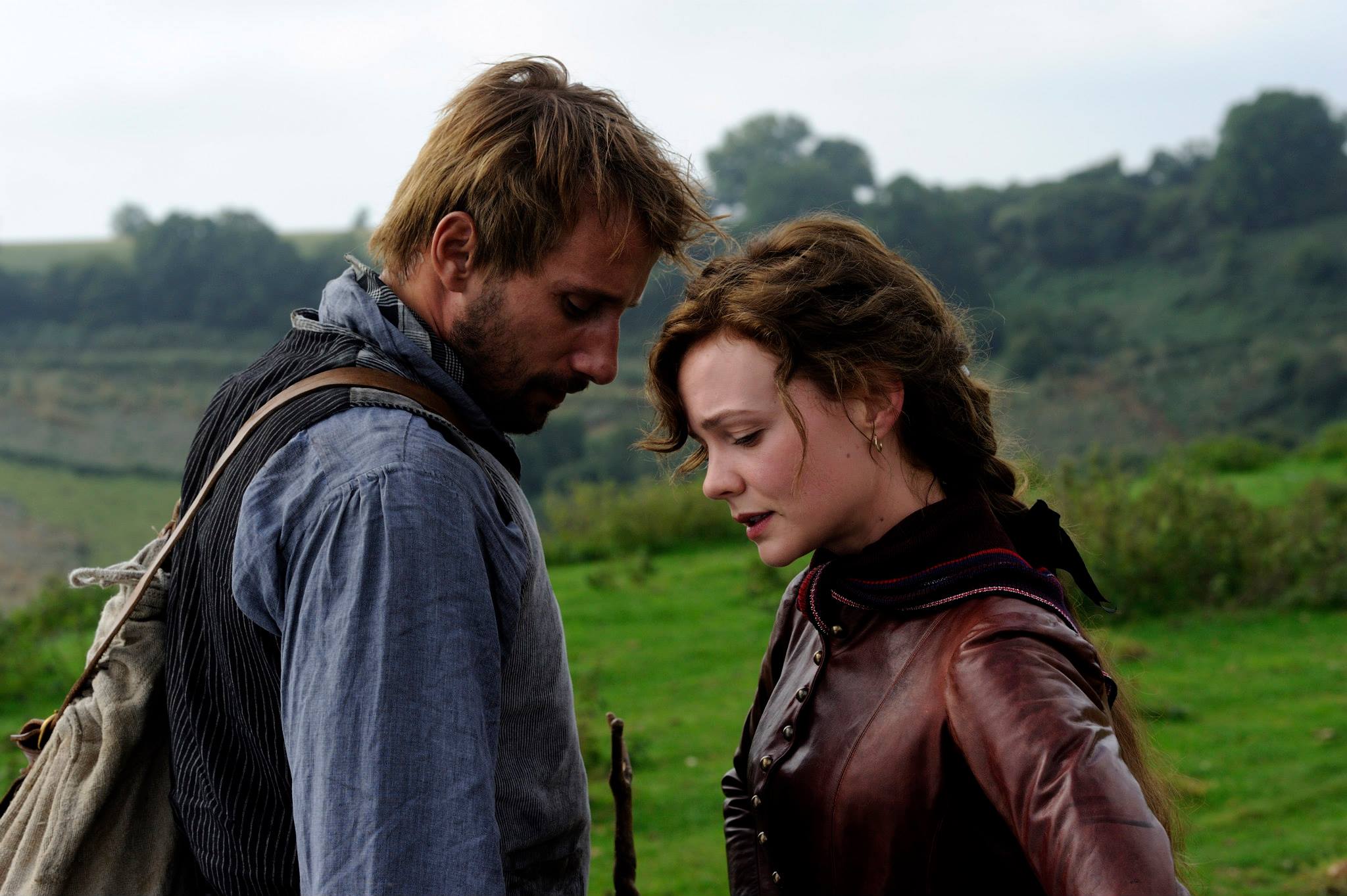
Bathsheba Everdene (Carey Mulligan) spends time in the Dorst countryside at the start of the film. The year is 1870 and her days spent riding across great hills, valleys and among the trees.  The land owner Gabriel Oak (Mattais Schoenaerts) who has 200 sheep on his 100 acres begins to notice of Ms. Everdene eventually asking for her hand in marriage. Bathsheba is fiercely independent does not think that she needs a man or husband but if she did it would have to be someone exceptional to reign her in. The pair soon have a twist of fate. Oak's sheep are lost in a freak accident then Bathsheba inherits her uncles farm and leaves the country side.

Ms. Everdene moves to Farm Robbin then quickly make changes. Mr. Oak arrives shortly thereafter.  The new mistress faces challenges from the existing staff and being the only female at market. She soon makes an impression on her new neighbour the respected William Boldwood (Michael Sheen) who falls for his new neighbour leading to her second marriage proposal. Her third was not too far away as British Solider Sargent Francis Troy (Tom Sturrige) swordsmanship and read coated attire turn her head.


The strongest part of the film is the writing. The dialogue between the characters is crisp and direct. The four main characters are well fleshed out and the supporting characters at the Robbin Farm have their distinct qualities. The other notable element is the cinematography. The landscape views are picturesque bringing the viewer directly into the region and the time period.

Bathsheba's strong side continues to shine at the farm.  She is willing to jump in and participate in any task that her staff do on the farm from washing the sheep to bringing in the harvest. Her three suitors circle around her orbit until she makes a decision on whom to wed. The change in her marital status brings a master into the home effecting the power structure of the farm.


Carey Mulligan turns in a solid performance as the main character in the production. She is strong in a male dominated world and industry being clear and resolute with her decisions. Mattais Schoenaerts continues a string of strong performances as Mr. Oak. At the outset he is a landowner then his fate turned to a worker but he maintains an even head and a good eye for character throughout the piece. Michael Steen is notable in a smaller role and could have done with more screen time in the film.  Look for Juno Temple in a meaty supporting role as Fanny Robbin opening with a chance to marry a solider at the start of the film but due to a mix-up ending up struggling to live day to day in the shadows.

Far from the Madding Crowd is a solid adaptation of a Thomas Hardy novel. The piece is well written with the English countryside beautifully presented.  The main actor turn in sound performances. If you are a fan of Victorian Period pieces then the picture is worth a look.

*** Out of 4.

Far from the Madding Crowd | Thomas Vinterberg | U.K. / U.S.A. | 2015 | 119 Minutes.

Tags:  Thomas Hardy, Victorian Era , British Army,  Farms, Sheep, Harvest, Courting, Marriage.


Monday, April 27, 2015

HotDocs 2015 Film Review - The Barkley Marathons: The Race That Eats It's Young

The Barkley Marathon may be the most difficult cross-country race in the world.  The race consists of five 20-mile loops. The first is run clockwise, the second counter clockwise around the course. Loops three and four repeat the format of the first two. If there are runners to start the fifth loop the first runner chooses a direction then each runner follows in the alternate direction.  The course winding through Frozen Head State Park is not well marked so there are books tied out in the woods and each runner must pull out the page corresponding to their bib and bring the pages back to the starting yellow gate to signal completion of the loop.  The runners have 60 hours to complete the race and the start time can be anywhere in a 12 hour window.

The race creators Gary Lazarus Cantrell and his partner know as Raw Dog got the idea for the race from the failed escape of James Earl Ray from Brushy Mountain State Penitentiary in 1977. Ray managed to get 8 miles from the prison before capture.  Cantrell figured that if Ray could do 8 miles he could run 100 miles in the woods leading to the first Barkley Marathon in 1986. The race comes by its reputation honestly. In the first 25 years only 10 runners had finished the race. The elevation and decent during the race is the equivalent to summiting and descending Mont Everest twice. The Tennessee woods is full of jagged rock rockface, thorny bushes and changing weather that offer unique challengers to the runners.


Directors Timothy James Kane and Annika Iltis spend the first portion of the film introducing the audience to some of the potential contenders for the 2012 race, characters that run the race on a regular basis and pretenders that have no shot at winning.  The race coordinators show their evil side by giving one of the 40 spots to an applicant that has no business being in the race dubbed the Human Sacrifice. They also instituted playing taps for each contestant as they drop out of the race.  Two of the prominent entrants are Brett Maune who is one of the few that finished the race before and Jared Campbell who has the potential to finish and makes a smart decision to follow Brett's lead.

However Cantrel is the heart and soul behind the race. As the action progress he gives his comments about the contenders, talks about the tough spots on the course such as Checkmate Hill, the Pillars of Doom, Testicle Spectacle, Rat Jaw and chats about the contenders pace encouraging racers with potential to keep going. He's the one that determines the entry fee based on what he needs. The $1.60 deposit is standard as is the licence plate from the home state of each first time participant plus the letter of condolence each runner receives when their application is accepted. For a while Cantrell needed white shirts so that was the entry fee, then it switched to socks and is currently a flannel shirt.


The film is shot from specific locations on the course that give a wide view of the runners. One of the runners also donated their head cam footage that gives an in the action feel of the race. The retirements begin right away on the first lap. Soon the numbers are down to 10 then 7 then to 5 by the completion of the third loop affectionately called the fun run.  The compelling part of the race is the comradely built amongst the runners as the race goes along. When the numbers dwindle to a final few The experienced runners that have dropped out and are still on hand offer their guidance on feet heath, calorie intake and what's the best strategy to continue on in the race.  It's as if they are all in it together in an attempt to get someone to the end.

The Barkley Marathons: The Race That Eats its Young is a production driven by the unique characters that organize attend and participate in the race. It's a rarity in the documentary field that the audience is actually entertained and has several moments where they can laugh. It has a secret entry process and the fewest finishers of any ultra marathon or endurance race in the world. The directors present the essence of the event in a film that I can recommend.

*** Out of 4

The Barkley Marathon; The Race that Eats it's Young | Annika Iltis/ Timothy James Kane | U.S.A. | 2015 | 89 Minutes.

Tags: Endurance Race, Ultra Marathon , Cross Country , Base Camp, Brushy Mountain Prison, Tennessee, James Earl Ray.

Sunday, April 26, 2015

HotDocs 2015 Film Review - Thought Crimes

Protection under The First Amendment of the United States Constitution was on trial during the Gilberto Valle Cannibal Cop case. Gilberto's wife Kathleen discovered that her husband and father of her baby daughter had been visiting violent fetish sites and engaging in fantasy conversations with other site members about kidnapping, torturing, confining, raping and eating women.  The conversations were very detailed with each step planed out, locations to do the acts presented, and compiling the list of items that would be required to execute the plan. What really alarmed Kathleen  was that photos and names of people that she knew were uploaded from her husbands account and even her name was mentioned. The post listed the parts of her body that had a good source of meat and how she did not know what he would do to her as she slept in the other room.

Kathleen took her findings to the authorities and based on direct repeated conversations with other site members, using actual peoples names and a trip to Maryland for brunch with one of the potential victims. The prosecutors had their overt act to bring the case forward. They gained access to Gilberto's computer went though his chat history and his Google search history to find search topics:  how to kidnap, how to make chloroform, what does human flesh taste like. The two charges the prosecution decided to pursue were conspiracy to kidnap and unlawful use of the police database.


Director Erin Lee Carr uses a mixture of first person interviews, media accounts and home movies to tell the story. She interviews Valle extensively along with several psychologist, and legal minds to obtain their thoughts on the case. She also speaks to Valle's mother and father about their son. The psychologist opinions conflict as the issue rest with where does a thought cross from fantasy to reality. Carr presents an interesting comparison to writers such as Stephen King.  King has written many horrific stories but is not under investigation.  If Valle is just a good story teller how can be charged with a crime as Valle states himself he could not hurt a fly.  The opposite view points to the real people's details he posted on the site, plus his use of the police database to search for details on potential targets then the overt act of the trip to Maryland to meet with a potential target for lunch then upon return home immediately going online to discuss the trip and how the target looked.


The film falls down due to its style choices. The piece has a very television investigate report look and Carr pays up the tabloid angle too much.  Showing the sensational headlines from the New York tabloids and local news reports with the headline cannibal cop much too often. The production uses tabloid covers with Valle in a chef's hat or hovering over a late pot on a stove with a giant ladle. The piece also uses distasteful transitions from discussions and pictures illustrating cannibalism in the courtroom to Valle cooking at his mothers place during his period of house arrest.

Thought Crimes gathers a diverse group of psychological and legal minds to discuss an important first amendment issue case that could have long lasting future implications. The professionals have a thought provoking discussion for each side. Director Carr had a lot of material to work with from many sources but could have made better decisions with the delivery of the material. If you have an interest in the case or the first amendment debate its worth a look despite it's shortcomings.

** Out of Four

Thought Crimes | Erin Lee Carr | U.S.A. | 2015 | 81 Minutes.

Tags; First Amendment, New York City Police, Fetish Site, Canabilism, Google Searches, House Arrest.


Hot Docs 2015 Film Review - Daughter of the Lake

An elderly Andean woman lives and works on her family farmland watched by the mining company security forces. The mining company wants her off her land, as there are deposits of gold lying beneath. Her friend Nelida comes to visit often asking about the status of the local water and food source the Blue Lake and her efforts to keep the mining security forces at bay. Neilda is going to law school in the city in an attempt to have formal training to battle the corporations. Her actions have a negative impact on her family as her dad is let go from his manual labour job at the mine. When Nelida asked her dad about the dismissal he openly states that it was due to her activist activities.

Director Ernesto Cabellos shines a light on the plight of rural Peruvians as they struggle against the might of corporations that are strongly supported by the government and who suck the water away from communities to support their operations. The documentary looks at two main communities at different stages of deterioration the Andean rural lands and Totora, Oruro Bolivia where the treasure was tin and the community is left with only one water source amongst a sea of sand, dirt and dust.


The production shines in the visual display of the films major settings. The Andean land is green and lush with the centrepiece Blue Lake. The residents are often forced to wear water boots as water bubbles up from the earth below. But across the way is the mining company with its mass earth excavation winding dirt roads and industrial vehicles moving in and out of the site. The rural land has fish in the lakes, birds in the trees and animals grazing. The third settling is the concrete filled noisy cities first Cajamarca where Nelida is studying law then the capital city of Lima.


One particular intriguing interlude is a short encounter with a group of women who work in a mine in Oruro Bolivia.  Cabellos uses a dolly came to follow the women into the mine with the lights of their helmets being the only source of illumination. The women are there to provide for their families and the sequence gives a real feel of the tight working quarters. The women discuss how they had to fight against the men to gain jobs at the mine as they were told that women in the mine would upset the spirits rendering the mine barren. Their day ends as they push out a mining cart with the days haul. The firefly like helmet lights growing in size and illumination as the women emerge into the daylight leading to the best transition of the piece to a jewellery store in Amsterdam. Here we meet the end product at the store of a jewellery designer who has made a conscious effort to use source materials that are produced as humanly as possible. The production follows her on a trip to the region where she sees gold being produced but even she can see the hard labour of the locals that produced 15 grams of gold in a 24 hour period paired with the massive clearing of the jungle for the mine operations may not be in the best interest of the planet.

Daughter of the Lake is an insightful study of the ongoing struggle between rural and city, corporations and natural environment. The film's opening words are Water = Blood; Earth = Life and Lake=Mother.  The following shot is an explosion of dynamite as another part of the countryside loses out to the business of mining. The rural residence are watchful, prepared and ready to protect the land and its resources. Their dilemma; the short term easily gain presented to governments by mining corporations that take from the land for profit and benefit of their investors.

***  Out of Four.

Daughter of the Lake | Ernesto Cabellos | Peru /Bolivia / Netherlands | 2015 | 87 Minutes.

Tags; Water, Peru, Bolivia, Mining, Gold, Tin, Diamonds, Rural, City, Law, Activist, Andean Amsterdam.