Reviews & Commentary on Film Festival Screenings, Select New Releases and Contemporary Foreign Film.
Monday, February 18, 2013
TBFF Film Review - Phone Swap
Akin (Wale Ojo) is a top manager for a leading Lagos corporation. He has an idea that will change his company and easily lead to his appointment as CEO of the company. He does not care who is effected in his department or if his current boss looses her job as a result. Therefore his boss will not let him know the location of the retreat whee the company business will take place. Akin puts his loyal but easily influenced assistant Alex ( Hafiz Oyetoro) on the case and proceeds to the airport to await the call with the details of the destination.
Mary ( Nse Ikpe-Etim) is a fashion designer. She is the main creative mind in her store but continues to be bullied by the store owner who takes credit for her work. She is also having issues at her village between her sister and his husband and her father wants her to come home to mediate the dispute between the two. Mary is given the time off of work and its at the airport where she runs into Akin (literally) and the two switch blackberries.
Kembi Adesoye delivers a well written script and manages to mix in Igbo, Yoruba and some Ghanaian into the dialogue. A happy coincidence is that both Mary's friend at work and Akin's assistant are both named Alex so texts coming and going from each go undetected even after they have switched phones. The devices used to acknowledge the swap is the ring tone of Mary's phone. When Akin first hears it he thinks its someone else's until he discovers the strange tone is coming from his pocket. Both lead characters of Akin and Mary are well written. Akin initially comes across as the no nonsense business man that is totally out of his element in the country town of Owerri while Mary is the soft meek designer that lacks the confidence to stand up for herself and her work. Both grow during the film and in fact do each others task since they have not only swapped phones but destinations as well.
Costume designer Adesuwa Iyen Agbonifo has a great assignment on this film considering one of the main characters is a dress designer can produced many bright colour outfits and native attire for the characters. The business characters are all dressed in traditional business fare. Mary's sister Cynthia (Ada Ameh) is an interesting contrast in her police / military outfit by day and her traditional Nigerian dress when she is off duty in her village. Akin's mother has a rich wardrobe of a well to do resort town resident accompanied with traditional head dresses.

Director Kunle Afolayan takes a shot at a comedy for the first time. He is the son of a famous Nigerian director who started out in the banking industry. None of his other siblings follow into his fathers profession. Kunle decided to direct and Phone Swap is a departure from his two prior films in the drama and thriller arena.
Editor Yemi Jolaoso does an excellent job with the materials. The film features many cuts between characters in different locations and often goes to the split screen route which can be risky but fits the narrative well here. It's through the split screen sequences as they talk on the phone that that Mary and Akin's relationship grows and they recount their progress working on each others tasks.
A key well edited sequence is the airport swap incident where Mary and Akin run into each other and the cut goes to each phone sliding away from the impact area then picked up by passers by and returned to the wrong person is a well edited sequence of the key moment in the film. The scenes between Akin and his mother are also edited well as again in two different locations can refers to known responses to each other over the phone.
One of the high comedic sequences in the film is the reaction of Akin and Mary's recent ex's when they call find a strange voice on the end of the respective phones. Followed by the steps each take to confront the supposed interlopers.
The soundtrack features songs with traditionally Nigerian rhythms, drums are predominate The movie theme Fate has a Plan for Everyone by Truth features drums, chanting, fast paced and uplifting lyrics. With You has more of a dance feel with some traditional beats in the chorus. Life is Beautiful is a very light piece with a slower beat and an island type sound.
The Production design led by Pat Nebo is a main element to show the contracts of the main characters situations. Akin insists that Mary stays at his mothers while in Abuja. Akin's mother's place is a lovely resort town gated estate with spacious rooms, a pool and and extensive garden. n enormous amount of space for one resident. Upon hearing this Cynthia insist that Akin stay with Mary's family. Their dwelling is a two room farmhouse with Mary's dad, children and cousins all residing under the same roof. The look of the small farming town is authentic and rural.
Mary's family in Owerie are well cast. Her dad (Chikla Okpala) has a strong performace as Mary's farmer dad who has to deal with an overbearing daughter and pending arrival of in laws. Her sister is great showing a mean tough law enforcer and then as the dutiful wife. Mary's co workers in the salon especially the actress that plays Alexis and the foil Alexis at Akin's shop is laugh out loud funny every time he hits the screen. Many local actors were used to play Akin's work associates at the company retreat in Abuja.
Kunle Afolayan crafted a highly watchable film with a good story and a cast lead by two talented lead actors The film is a good representation of Nigeria an anti- Nollywood film. Phone Swap is full of laugh out loud moments and shows how the most unlikely people can adapt to unexpected situations and circumstances. A film I can definitely recommend.
*** out of 4
Phone Swap | Kunle Afolayan | Nigeria | 2012 | 120 Minutes.
Inaugural Toronto Black Film Festival.
TBFF Film Review - Rebelle (War Witch)
A narrator begins a story that she is telling to her yet unborn child. The opening scene is a small village where two rebel canoes full of fighters with AK 47's sack the town round up all of the children with the potential to fight and force them to kill their loved ones or their loved ones will suffer a more brutal fate if the rebels do it themselves. Among this group is 12 year old Komona (Rachel Mwanza) and we soon learn that she is the narrator telling her story of the time she went to war to her unborn child.
The children are taken by the rebel leaders and taught what it is to be a rebel solider. Their gun is now both their mother and father and a rebel solider must never loose their gun. Soon Komona gains the reputation of having a feel for the location of the government forces. She sees ghosts when she is fed the hallucinogenic milk like substance from the trees in the woods. These ghosts warn her when the government troops are present. The rebel chief The Great Tiger (Mizinga Mwinga) believes that she is a witch and Komona is protected from any cruelty from other soldiers. The flip side is she is only valuable until the Rebels suffer a setback and her powers are questioned.
Magic spirituality and superstition play a major role in the community and the story. The rebels have a spiritual leader who directs the forces based on the outcome of casting stones. The group has one Albino solider the Magician (Serge Kanyinda) who has rock like amulets that can protect your spirit from harm in the war. The piece is a mix of real events, fantasy and a glimpse into how forces can and do follow fantastical elements and make tactical decisions based on the spirit world.
Writer/ Director Kim Nguyen displays the brutality of a child soldiers life. Starting with a tear down of the soldiers past life then a rebuild into making your gun and the rebels your new family. The terrible conditions while on patrol. very little to eat hallucinogenics to keep the soldiers moving. Nguyen divides the film into chapters based on Komona age at the time of the action. Starting from when she is kidnapped at 12 and moving onwards.
After a close call with government forces Komona is convinced to leave the rebels by the magician. He explains that the Great Tiger killed his last three witches once they fell out of favor. Even after leaving the Rebels Komona continues to have the dreams of ghosts and family members. The Rebels also are not faraway as the Chief wants his witch back. The film does have an extended comedic interlude or a beak from the violence and strife as the Magician attempts to find a white rooster before he can have Komona's hand in marriage.
Cinematographer Nicolas Bolduc presents a dreary landscape to match the sorrow and horror of the child solider existence. The sky's are often grey washed out colours mud, and the ghosts appear with white ashes covering their skin. There is some colour mainly during the interlude in the Magicians village when Komona and the Magician spend time with his uncle the butcher. We see the white of the rooster, the bright colours in the village and the greens of the local vegetation. The other piece of colour is in the rebel camp. The shots in the cam feature a blue sky, colourful plants and foliage and rich colour of the roads in the compound.
The film shot in the Congo has many location choices . The opening village has the look of a typical village in the sub Sahara area. It's a small group of buildings near the water. A variety of materials are used for the buildings from Aluminium to wood to hanging tapestries and tarps. The buildings are multicoloured to show that each piece patched together is of different material. The base for the rebels has the elements of an old religions temple. The main building in the compound is a huge structure with a large dome. It's missing windows and many of the ones that are present are broken. The ground area has sandbags which can be part of the defense if attacked by the government forces. The natural countryside is also used in abundance for the film. The river by which the rebels first come to Komona's village It's also the river that she goes back along to bury her parents and end the ghosts from visiting her at night. The forest that the rebels hike through to head to battles with the government forces. It's also in the forest where the new recruits have their first training and taste the milk which leads to hallucinations. The country roads are also prominent as travel is a major part of the piece by motorcycle, foot and in the back of trucks and vans.
Costume designer Eric Poirier dresses the cast to suit the surroundings. Most of the child soldiers are dressed in tank tops and shorts. Some of the commanders are dressed in military green and sport berets. The wardrobe of the characters does not vary significantly during the piece. Komona does wear a bit of Americana with an Abercrombie and Fitch top that barley covers her belly towards the end of her pregnancy. One of the comedic moments involves an attempt by the magician to take clothes from a line in a local village and being chased off by an older local woman wielding her own AK 47.
The soundtrack is filled with local African songs and orchestral pieces. The music is mainly subtle and does not overwhelm or dominate the action on the screen. The orchestral choices are heavy in strings, violins, violas which are foreboding and set the sorrowful mood of the main character for most of the film.
The film was cast both in Canada and the Congo. Rachel Mwanza is excellent as the central character Komona. Alain Lindo Mic Eli Bastein is very strong in a small role as the terrifying Rebel Commander. Serge Kanyinda also puts in a memorable performance as the Magician. The local casting in the Congo were all good choices. Especially the villagers that laugh opening at the Magician despite that fact that he is armed with Kalashnikov rife as he enquiries forcefully during his search for a white rooster.
Rebelle (War Witch) places a romantic story in between the ongoing violence of a civil war. The two main protagonists attempt to escape the warrior life and manage to do so for a short period before violence and war finds them again. Nguyen tells a tense, gripping story of the horrors of war fought by child soldiers in Africa. The film is not specific to a particular struggle thus it could easily apply to many different battles throughout the continent. Nguyen brings out the human element within the child solider and shows how they can be resilient in the face of horrific acts and actions that they have seen and performed themselves. This is a film that I can definitely recommend.
*** 1/2 out of 4
Rebelle (War Witch) | Kim Nguyen | Canada | 2012 | 90 Minutes.
Inaugural Toronto Black Film Festival.
Thursday, February 14, 2013
TBFF Film Review - Nairobi Half Life
Mwas (Joseph Wirimu) is a small town dreamer. He lives in rual Kenya and sells counterfeit movies for 50 a piece. He often acts out scenes from the films such as the five point exploding heart technique from Kill Bill Vol. 2 to sinch the sale. Mwas wants to be an actor himself and decides to go to Nairobi to make his acting dream come true. As part of his plan Mwas makes a deal with a member of a travelling acting crew that comes through his small town to represent him as an agent.
After gathering his affairs and different levels of reaction from his father brother and mother, plus accepting a package from a relative and local gangster Mwas heads out to the big city.
The first day in Nairobi does not go well. Mwas is rolled almost the minute he gets off the bus and ends up spending his first night in the city jail. There he meets Oti (Olwenya Maina) who becomes one of is pals when they both are out of jail.
Eventually Mwas does make it to the local acting house The Phoenix where he auditions and lands a role in a play. He also spends time with Oti and his friends taking for themselves anything that Nairobi puts in their paths.
Director David Tosh Gitonga presents an entertaining film filled with many comedic moments. The film captures small town Kenya and the big city of Nairobi equally well. Gitonga gives you the sense of the haves and have nots in Nairobi. On the one hand you have people that have next to nothing. The men steal anything they can and the women only option for money appears to be the sex industry. On the other side the rich in their suits and designer dresses work in the downtown office towers and drive their SUV's home to their gated residences outside of town. Even Mwas' play has as it's central theme the gulf between the rich and the poor in the city. Somewhere in the middle are the corrupt cops looking for their cut from crime then turning on their criminal partners when they have out served their usefulness. The viewer gets the impression that what Gitonga is portraying on film is not far off every day life in Nairobi
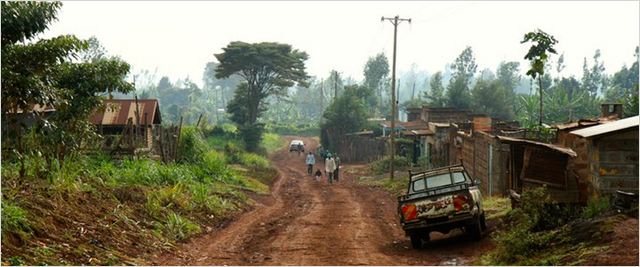
Cinematograph Christian Almesberger presents a rich visual of the Kenian countryside. The bright vibrant colours of the dirt roads, the browns in the setting sky and shadows engulfing the actors on screen. A dark back lit foreground dominate Mwas' last night at home before he leaves for Nairobi. The presentation really sets the mood for night-time in a village where light is scarce. The visuals give the audience the strong impression that they are under a Kenyan moonless sky.
Costume Designer Abul Mhammmed takes a minimalist approach for the film. Mwas is in the same clothes the first two days he is in Nairobi. A change in outfit is the device used in the script to show that he has been in town for a while and established. The other characters are outfitted in standard young people wares. The young prostitute females are dressed rather normally in shorts and halter tops.
Xaver von Tryer's soundtrack is understated and does not overwhelm the action or dialogue. The musical choices back the action sequences and slowly build to match the events on screen. Selections supporting Mwas criminal life are more gritty then the pieces underpinning his acting related scenes. The backing music for Mwas first appearance at the National Film Board is light, airy, woodwind driven and almost Asian in its feel. The haunting main theme Half Life mixes drums, bells and guitars in rich mixture of native beats, rhythm and sound.
Mwas develops a close friendship with Oti's girlfriend Amina (Nancy Wanjiku Karanja) and feels that he can only trust her with his dream of becoming an screen actor as he continues to be part of Oti's crew in his down time.
Nairobi Half Life is a well written piece. The dialogue is direct and is full of local flare. The characters switch easily back and forth between Swahili, Kikuyu and English sometimes even in mid sentence. The story moves at a fast pace that keeps the viewer engaged. The main characters are multi dimensional and the audience quickly becomes invested in their fates. The writing team create a bathroom scene in the first act that makes the toilet from Trainspotting look like the finest the Ritz Carlton has to offer.
Joseph Wairimu is well cast as the central figure Mwas. His first impression is that of the town jester but shows himself to be very loyal, witty and extremely protective of his friends. Oti is equally good as the crew leader and Mwas best friend in Nairobi. The aforementioned Karanja is very strong as Oti's girlfriend and Mwas friend and confidant Amina.
David Tosh Gitonga has crafted a film that shows the good and bad parts of every day life in Niarobi and has a theme running throughout of the separation between the rich and poor. Nairobi Half Life is a film that I can recommend.
*** out of 4
Nairobi Half Life | David Tosh Gitonga | Kenya / Germany | 2012 | 96 Minutes.
Opening Night Gala Inaugural Toronto Black Film Festival.
After gathering his affairs and different levels of reaction from his father brother and mother, plus accepting a package from a relative and local gangster Mwas heads out to the big city.
The first day in Nairobi does not go well. Mwas is rolled almost the minute he gets off the bus and ends up spending his first night in the city jail. There he meets Oti (Olwenya Maina) who becomes one of is pals when they both are out of jail.
Eventually Mwas does make it to the local acting house The Phoenix where he auditions and lands a role in a play. He also spends time with Oti and his friends taking for themselves anything that Nairobi puts in their paths.
Director David Tosh Gitonga presents an entertaining film filled with many comedic moments. The film captures small town Kenya and the big city of Nairobi equally well. Gitonga gives you the sense of the haves and have nots in Nairobi. On the one hand you have people that have next to nothing. The men steal anything they can and the women only option for money appears to be the sex industry. On the other side the rich in their suits and designer dresses work in the downtown office towers and drive their SUV's home to their gated residences outside of town. Even Mwas' play has as it's central theme the gulf between the rich and the poor in the city. Somewhere in the middle are the corrupt cops looking for their cut from crime then turning on their criminal partners when they have out served their usefulness. The viewer gets the impression that what Gitonga is portraying on film is not far off every day life in Nairobi
Cinematograph Christian Almesberger presents a rich visual of the Kenian countryside. The bright vibrant colours of the dirt roads, the browns in the setting sky and shadows engulfing the actors on screen. A dark back lit foreground dominate Mwas' last night at home before he leaves for Nairobi. The presentation really sets the mood for night-time in a village where light is scarce. The visuals give the audience the strong impression that they are under a Kenyan moonless sky.
Costume Designer Abul Mhammmed takes a minimalist approach for the film. Mwas is in the same clothes the first two days he is in Nairobi. A change in outfit is the device used in the script to show that he has been in town for a while and established. The other characters are outfitted in standard young people wares. The young prostitute females are dressed rather normally in shorts and halter tops.
Xaver von Tryer's soundtrack is understated and does not overwhelm the action or dialogue. The musical choices back the action sequences and slowly build to match the events on screen. Selections supporting Mwas criminal life are more gritty then the pieces underpinning his acting related scenes. The backing music for Mwas first appearance at the National Film Board is light, airy, woodwind driven and almost Asian in its feel. The haunting main theme Half Life mixes drums, bells and guitars in rich mixture of native beats, rhythm and sound.
Mwas develops a close friendship with Oti's girlfriend Amina (Nancy Wanjiku Karanja) and feels that he can only trust her with his dream of becoming an screen actor as he continues to be part of Oti's crew in his down time.
Nairobi Half Life is a well written piece. The dialogue is direct and is full of local flare. The characters switch easily back and forth between Swahili, Kikuyu and English sometimes even in mid sentence. The story moves at a fast pace that keeps the viewer engaged. The main characters are multi dimensional and the audience quickly becomes invested in their fates. The writing team create a bathroom scene in the first act that makes the toilet from Trainspotting look like the finest the Ritz Carlton has to offer.
Joseph Wairimu is well cast as the central figure Mwas. His first impression is that of the town jester but shows himself to be very loyal, witty and extremely protective of his friends. Oti is equally good as the crew leader and Mwas best friend in Nairobi. The aforementioned Karanja is very strong as Oti's girlfriend and Mwas friend and confidant Amina.
David Tosh Gitonga has crafted a film that shows the good and bad parts of every day life in Niarobi and has a theme running throughout of the separation between the rich and poor. Nairobi Half Life is a film that I can recommend.
*** out of 4
Nairobi Half Life | David Tosh Gitonga | Kenya / Germany | 2012 | 96 Minutes.
Opening Night Gala Inaugural Toronto Black Film Festival.
Sunday, February 10, 2013
Film Review - Side Effects
Director Steven Soderbergh ends his 14 year film making career with Side Effects that takes a hard look at the pharmaceutical industry and psychiatry in general. The film tackles the subjects of pills, medication, research projects and the role of pharmaceutical reps.
Emily Taylor (Rooney Mara) has everything anyone could want. Her Husband Martin (Channing Tatum) is a leading Stockbroker on Wall Street. They have a large home in Connecticut and are surrounded by well to do friends. The couple own a sailboat that they take out on a regular basis to relax at sea. Their estate is the scene of many parties where their gusts arrive and valet park their high end vehicles. Emily's life changes abruptly when her husband is arrested for insider trading and is sentenced to four years in prison.
Desperate, sad and anxious she turns to a local psychologist (Catherine Zeta- Jones) for a short period of treatment.
Jump ahead 4 years where Martin is set to be released from prison. Emily seems happy about the home coming but after driving her car into an underground parking lot wall is back in counselling this time seeing Dr. Jonathan Banks (Jude Law).
Soderbergh and writer Scott Burns lay out their opinions on the pharmaceutical industry. The pair reunite on Side Effects after working together on Contagion and The Informant! They touch on the need to treat through pills, how they are marketed, positioned and targeted at specific segments of the public. The way that the popularity of a new pill can be spread by both word of mouth and advertising. The film gives an account of a clinical trial from the approach by a pharmaceutical rep to the fee paid to the doctor for participating to the reaction of a patient when they learn their drugs will be free if they participate in the study.
Burn's script highlights the trips and perks given to doctors by the drug companies. From World Series trips to signed memorabilia and vacations to exotic locations. Doctors meeting at conferences and exchanging samples of new medications to try on their patients. Then ultimately if something tragic occurs to a patient under their care they take no responsibility at all for the event.
Soderbergh presents a well paced thinking piece that starts with the aftermath of a tragic incident then falls back three months in the past to tell the majority of the story. All the scenes in this film have meaning and importance. There are no throw away moments or filler.
The soundtrack is eerie and very staccato building suspense as the action builds and progresses.
Soderbergh handles the Cinematography himself once again under a pseudonym. The film has that normal yellowish hue of a Soderbergh film. Added to the visuals is a dull and a touch out of focus lens which fits well with Emily's blunted reactions and actions due to the medication she is taking.
The characters are fully fleshed out and all go through a series of ebbs and flows as the plot turns at right angels then flips 180 degrees one way and back 180 degrees in the other direction. Rooney Mara is excellent as the focus of the film who undergoes a plethora of emotions that switch with just about every scene. Jude Law is also strong as the psychiatrist who happens to be on shift at the Hospital the night that Emily crashes her car and is called in for a consult which turns into a full on patient doctor relationship.
Retirement film or not Side Effects is very good and a film that I can definitely recommend. If Soderbergh is in fact done making films at age 50 he has left on a high note.
*** 1/2 out of 4
Side Effects | Steven Soderbergh | U.S.A. | 2013 | 115 Minutes.
Film Review - Life of Pi
Director Ang Li has adapted to the screen a story that was previously thought to be unadaptable. Yann Martel's Booker prize winning Life of Pi. Li a chameleon of a director brings a fresh taste to the lost at sea motif.
Pi Patel( Suraj Sharma) was named more or less by his uncle. Pi's uncle was sick as a child and part of his treatment he was held upside down by his feet which gave him huge lung capacity. Due to the increased oxygen intake "Uncle" became a connoisseur of pools all over the world. The best being in France with water so clear it looked transparent. Based on that information Pi's father named him Piscine Molitor which was shorted to Pi. The name Piscine is not easy to grow up with Pi was called Pissing Patel and mocked his schoolmates. When he started high school he made the change to Pi but he was still called Pissing. One day decided to report that Pi was short for the Mathematics symbol pi. It did not stick until he started to write pi to more and more decimal points each day on the blackboard at school. Finally the whole school was watching as he did Pi on the blackboard to decimal points in the hundreds killing the nickname Pissing Patel.
A local journalist who knows Uncle a friend of Pi is sent to learn of his incredible story. The Journalist meets the Adult Pi ( Irrfan Khan) in his home in Montreal and they sit down to talk about his life story.
His family had the local Zoo and Pi was fascinated by the Royal Bengal tiger named Richard Parker a result of a mix up with the name of the person who caught him. Pi's Father taught him a tough lesson to show that the Tiger is not a friend but instead a fierce hunter that would rip of an of his limbs if given a chance.
Religion plays a major role in Pi's life. He was first hindu but as a pre- teen visited a church and then a temple soon after and adopted Christianity and the Muslim faith along with his Hindu principals.
The economy is bad in the local town of Pondicherry. Thus Pi's father decides to move the family to Canada and sell of the Zoo animals. The book passage on a Japanese commercial vessel and his family and that's were the adventure begins. Pi's father has a dispute with the ships cook (Gerard Depardieu) who is rude to his wife. Early in the voyage the ship heads into a sever storm. While his family sleeps Pi' heads up to the deck to check out the events. He is forced to abandon ship as the storm pounds and tosses the vessel about in the sea.
Pi finds himself in a lifeboat with a Lion, Zebra and Oranagatan and jackal He stakes claim to one end of the vessel and begins to negotiate with the other creatures.
A classic tale of one person against nature. Pi has a journal of sea survival that he reads religiously. He finds food supplies begins to fish and at a key moment in the film realises that he has to feed the tiger or he will become tiger food itself.
Richard Parker although ferocious is very susceptible to sea sickness. After surviving one particularly intense storm. The realise that they need each other and Pi nurses the tiger back to strength.
After an interlude on an Island that appears to be paradise but turns evil at night. They set off again eventually finding land and parting ways.
Pi is questioned by the Insurance company for the Japanese Freighter who are skeptical of his story therefore he tells them a different version of events that they are more likely to believe. The journalist is left to determine which version of the story is correct the 227 day adventure at sea with multiple animals or the story with four people that ends up with Pi as the last survivor.
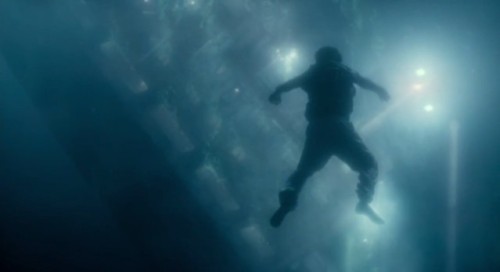
The visuals in this film are spellbinding . Cinematographer Claudio Miranda fills the screen with rich colours. The ocean is vibrant displaying all shades of blues and greens. The sea creatures fish, whales, flying fish and dolphins are sharp and crisp. On particular sequence with a school of jellyfish is mesmerizing mastery. The night shots of the amphibians glow to the point that they seem almost ultraviolet. The daytime sky is a rich blue while Miranda's work relay shines in the depiction of the nigh-time sky in the pacific ocean.
David Magee produced an excellent screenplay. Its a story set mainly in the mind of a 17 year old boy. with no other speaking characters in a lifeboat with a tiger. The dialogue is a 2 hour soliloquy but keeps you engaged as Pi reads and reviews his survival guide and negotiates for turf in the raft.
Ang Lee created a magical story with excellent song, song and visual effects. It is a film that is definitely one of the top stories of the year. Shot with amazing cinematography and use of colours, Life of Pi is the best use of three D technology since its rebirth.
**** out of 4
Life of PI | Ang Li | U.S.A. / Taiwan| 2012 | 127 Minutes.
Thursday, January 24, 2013
Fim Review - Searching for Sugar Man
On a winding road in Capetown South Africa we are introduced to Steve Segerman He is driving a compact vehicle with folk rock music coming out of the speakers. He explains that his nickname is Sugar because no one could pronounce Segerman when he was in the army. He was named after the hit song Sugar Man by great American Musician Rodriguez who is a megastar in South Africa but surprisingly to all South Africans not elsewhere and very little is known about the musician.
A group of South Africans decide to piece together the story of their hero. He was thought to have died on stage by his own hand either by fire or bullet. His career spanned two critical acclaimed but poor selling U.S. albums in 1971 and 72. The group begins to look into the lyrics on both albums for clues and eventually track his musical roots to Detroit Michigan.
Director Malik Benjelloul speaks to club owners and goers from the early Seventies who saw Rodriguez perform. They all remember the voice and the working class songs that were as gritty as the Detroit streets. Rodriguez did not cater to his audience; he often sang and played is guitar in the corner of a bar with is back to the audience. They were not even sure if he had a home. If you were to meet him he would say meet me at the corner and would never give a full address. The producers of his two albums were shocked that they were not a hit. The songs were Dylanesque with hard hitting plain lyrics backed by a strong voice and many powerful everyday messages.
Songs like the earlier mentioned Sugar Man featuring the activities of a drug dealer. The understated Crucify your Mind about a person that appears to have it together but is falling apart on the inside. The Cause who's first line is the haunting I lost my job and it was two weeks before Christmas. The happy base rift driven anthem I Wonder that asks about the listeners sexual experience and the folksy Inner City Blues on being thankful for what you have. Lastly A Most Disgusting Song describing all of the different types of places that he has played and shows that Rodriguez is equal parts wise-man, prophet, poet and artist.
Legend has it that a South African's American girlfriend brought a copy of Cold Fact to the country. The music spread across the country and became a symbol of the need to become anti-establishment and fight Apartheid from inside the isolated country. Rodriguez' songs became rallying Anthems to a generation of South Africans and they passed the passion for the songs on to their children.
Bendjelloul weaves a mysterious story across two continents. Mixed in with the soundtrack featuring the music of Rodriguez. In one excellent sequence the film switches to animation as we see Rodriguez walking down a block in the bar district of Detroit in the dead of winter an apparent homeless poet of the backstreets and alleys of the city. Benejelloul links together interviews with devoted fans, music journalists, and acquaintances from the 70's to slowly build a picture of the man that disappeared in the early 70's. The story has twist, turns and dead ends followed by leads from the most unlike sources even a web page for readers to provide any information they may have on the musician.
Searching for Sugar Man is an excellent watch and definitely top 5 film of 2012.
A film I can definitely recommend.
**** out of 4.
Searching for Sugar Man | Malik Bendjelloul | Sweden / U.K. | 86 Min.
Tuesday, January 15, 2013
Film Review - Zero Dark Thirty
Kathryn Bigelow's follow up to her Oscar winning The Hurt Locker sees the Director returning to familiar territory of the middle east and the aftermath of September 11, 2001. Instead of bomb detection and retrieval this film focuses on the 10 year hunt to find Osama bin Laden.
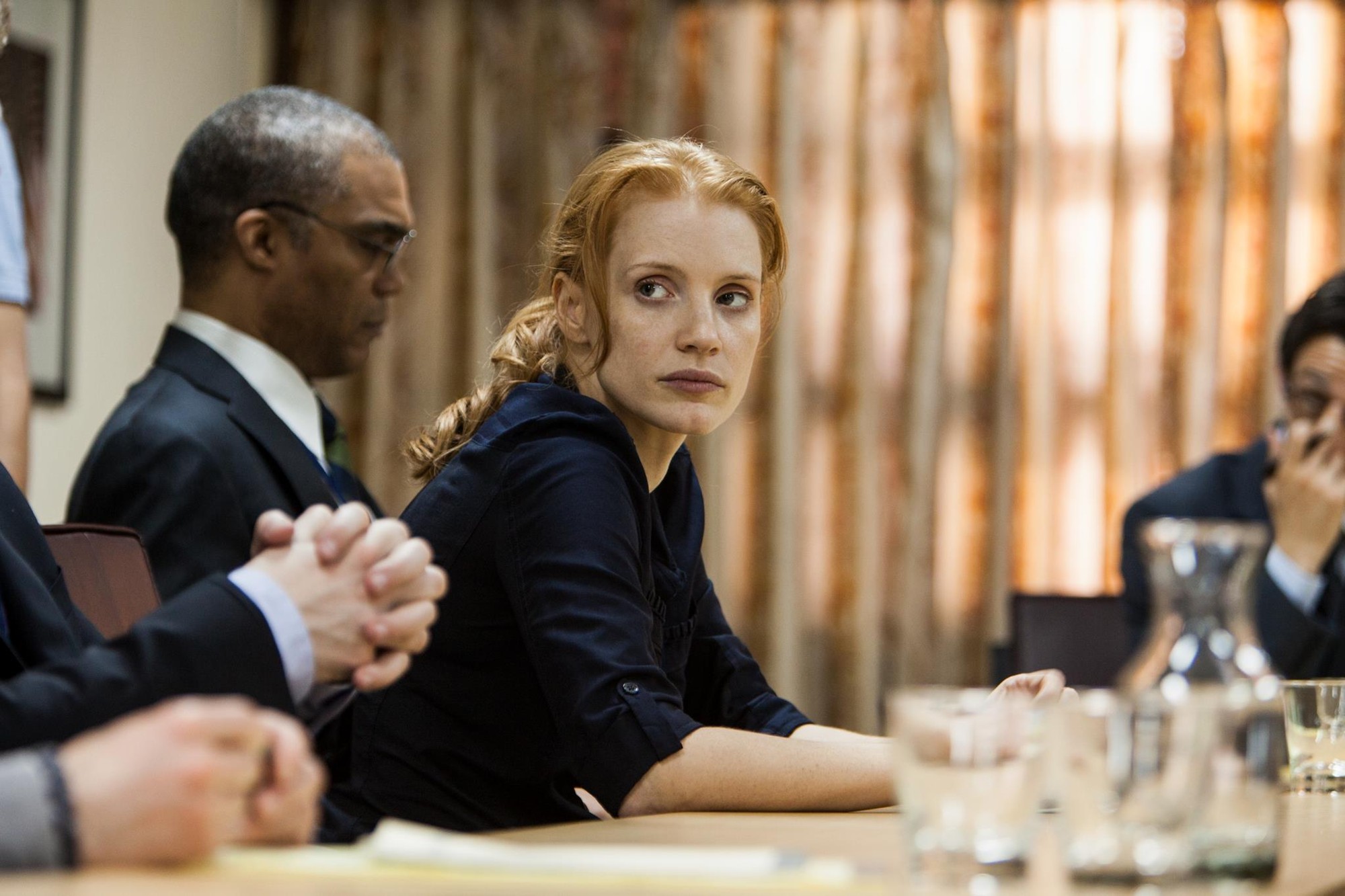
The films main character Maya (Jessica Chastain) is a recent CIA recruit sent to Pakistan to join the Working Group to gather information on the leaders, structure and operational procedures of Al Qaeda. She is hands on in the interrogation of detainees and reviews countless hours of footage of interrogations to gain information on the organization.
The story uses an episodically approach starting with the interrogation of a Saudi Al Qaeda money man Ammar (Reda Kateb) then shifting to other Al Qaeda detainees, network contacts and eventually the Seals.
Maya is searching for a courier who is known by a number of the detainees. She is hopeful that if she can find this courier that he may lead to bin Laden or it could turn out that he is last in line to a multi person row to the Al Qaeda leader.
All of the major historical events are touched on from September 11th, to the July 2005 London bombings, the attacks in India, the bombing at the US base in Afghanistan and the September 28, 2008 attack at the Marriott Hotel in Islamabad. The events serve as a sign post to advise the viewer of the timeline of the story. It can be difficulty to create suspense in a film where the viewer knows the eventual outcome however Bigelow manages to keep the suspense and tension at a high level.
One of the tools used greatly in the film is the score. It's full of traditionally local instrumental pieces and that familiar slow underlying hum of flutes & whistles, guitar like Ouds, tambourine and drums. The military scenes feature music with a driving baseline. The piece chosen to back the flight of the Seals to their target starts with a slow baseline the quickens using an up tempo string section then combines the two and builds in volume as the Seals move closer to their target.
Bigelow re teamed with Hurt Locker writer Mark Boal for this film. The pair did their research through interviews and document review. As they were gathering information about the events they learned about this junior female single minded agent agent who recruited right out of school had only worked on bin Laden. The co-producers knew they had found their lead character.
Film editors William Goldenberg and Dylan Tichenor did an excellent job with the film material. Especially strong were the scenes where they put together the different terror attacks over the 8 year period of the film and the reaction to each event by the Working Team.
Bigelow steers clear from politics for the most part. The events occur during both the Bush and Obama Presidencies. The role of politicians is not prevalent however the narrative clearly shows the time taken to fact check before a go ahead on the raid is given and there is some mention of that not being the case in relation to WMD's. The storyline also notes that the Detainee program went away but does not state overtly that it was due to the change in the White House.
Jessica Chastain is very strong as the featured CIA analyst who put together detainee interviews, messages and intelligence documents to piece together the workings of the highest level of the Al Qaeda network.
Aussie Jason Clarke puts in a strong performance as Dan the bearded feral master interrogator using the carrot but mainly the stick to obtain information from detainees then switches with ease to a clean shaven button down company man when posted back to C.I.A. Headquarters. Reda Kateb is memorable as the initially detainee during his extended scenes of interrogation and interplay with Clarke at a CIA Black Site. Brit Mark Strong who was excellent in 2011's Tinker Tailor Solider has an impactful opening scene mid way through the film. As CIA section chief George he delivers a forceful message to the Working Group in the wake of the Afghanistan base bombing. A key moment that gives new energy to the team and a great plot device to keep the pace moving. George later becomes the object of Maya's frustrations which is uniquely displayed during the pre-raid evaluation.
The role and actions of the Seals is well written and presented. They go from one task to the next, if there is a set back or new development they move ahead and adapt. Once a task is complete they switch on to the next item with no dwelling or reflections. When they are on duty they move at 100% when on down time they switch completely off.
Zero Dark Thirty features a strong script from well developed source material. A fast moving piece that does not drag despite its near 160 minute run time.
A film I would recommend.
Zero Dark Thirty | Kathryn Bigelow | U.S.A. | 2012 | 157 Minutes.
*** out of 4
The films main character Maya (Jessica Chastain) is a recent CIA recruit sent to Pakistan to join the Working Group to gather information on the leaders, structure and operational procedures of Al Qaeda. She is hands on in the interrogation of detainees and reviews countless hours of footage of interrogations to gain information on the organization.
The story uses an episodically approach starting with the interrogation of a Saudi Al Qaeda money man Ammar (Reda Kateb) then shifting to other Al Qaeda detainees, network contacts and eventually the Seals.
Maya is searching for a courier who is known by a number of the detainees. She is hopeful that if she can find this courier that he may lead to bin Laden or it could turn out that he is last in line to a multi person row to the Al Qaeda leader.
All of the major historical events are touched on from September 11th, to the July 2005 London bombings, the attacks in India, the bombing at the US base in Afghanistan and the September 28, 2008 attack at the Marriott Hotel in Islamabad. The events serve as a sign post to advise the viewer of the timeline of the story. It can be difficulty to create suspense in a film where the viewer knows the eventual outcome however Bigelow manages to keep the suspense and tension at a high level.
One of the tools used greatly in the film is the score. It's full of traditionally local instrumental pieces and that familiar slow underlying hum of flutes & whistles, guitar like Ouds, tambourine and drums. The military scenes feature music with a driving baseline. The piece chosen to back the flight of the Seals to their target starts with a slow baseline the quickens using an up tempo string section then combines the two and builds in volume as the Seals move closer to their target.
Bigelow re teamed with Hurt Locker writer Mark Boal for this film. The pair did their research through interviews and document review. As they were gathering information about the events they learned about this junior female single minded agent agent who recruited right out of school had only worked on bin Laden. The co-producers knew they had found their lead character.
Film editors William Goldenberg and Dylan Tichenor did an excellent job with the film material. Especially strong were the scenes where they put together the different terror attacks over the 8 year period of the film and the reaction to each event by the Working Team.
Bigelow steers clear from politics for the most part. The events occur during both the Bush and Obama Presidencies. The role of politicians is not prevalent however the narrative clearly shows the time taken to fact check before a go ahead on the raid is given and there is some mention of that not being the case in relation to WMD's. The storyline also notes that the Detainee program went away but does not state overtly that it was due to the change in the White House.
Jessica Chastain is very strong as the featured CIA analyst who put together detainee interviews, messages and intelligence documents to piece together the workings of the highest level of the Al Qaeda network.
Aussie Jason Clarke puts in a strong performance as Dan the bearded feral master interrogator using the carrot but mainly the stick to obtain information from detainees then switches with ease to a clean shaven button down company man when posted back to C.I.A. Headquarters. Reda Kateb is memorable as the initially detainee during his extended scenes of interrogation and interplay with Clarke at a CIA Black Site. Brit Mark Strong who was excellent in 2011's Tinker Tailor Solider has an impactful opening scene mid way through the film. As CIA section chief George he delivers a forceful message to the Working Group in the wake of the Afghanistan base bombing. A key moment that gives new energy to the team and a great plot device to keep the pace moving. George later becomes the object of Maya's frustrations which is uniquely displayed during the pre-raid evaluation.
The role and actions of the Seals is well written and presented. They go from one task to the next, if there is a set back or new development they move ahead and adapt. Once a task is complete they switch on to the next item with no dwelling or reflections. When they are on duty they move at 100% when on down time they switch completely off.
Zero Dark Thirty features a strong script from well developed source material. A fast moving piece that does not drag despite its near 160 minute run time.
A film I would recommend.
Zero Dark Thirty | Kathryn Bigelow | U.S.A. | 2012 | 157 Minutes.
*** out of 4
Subscribe to:
Posts (Atom)